
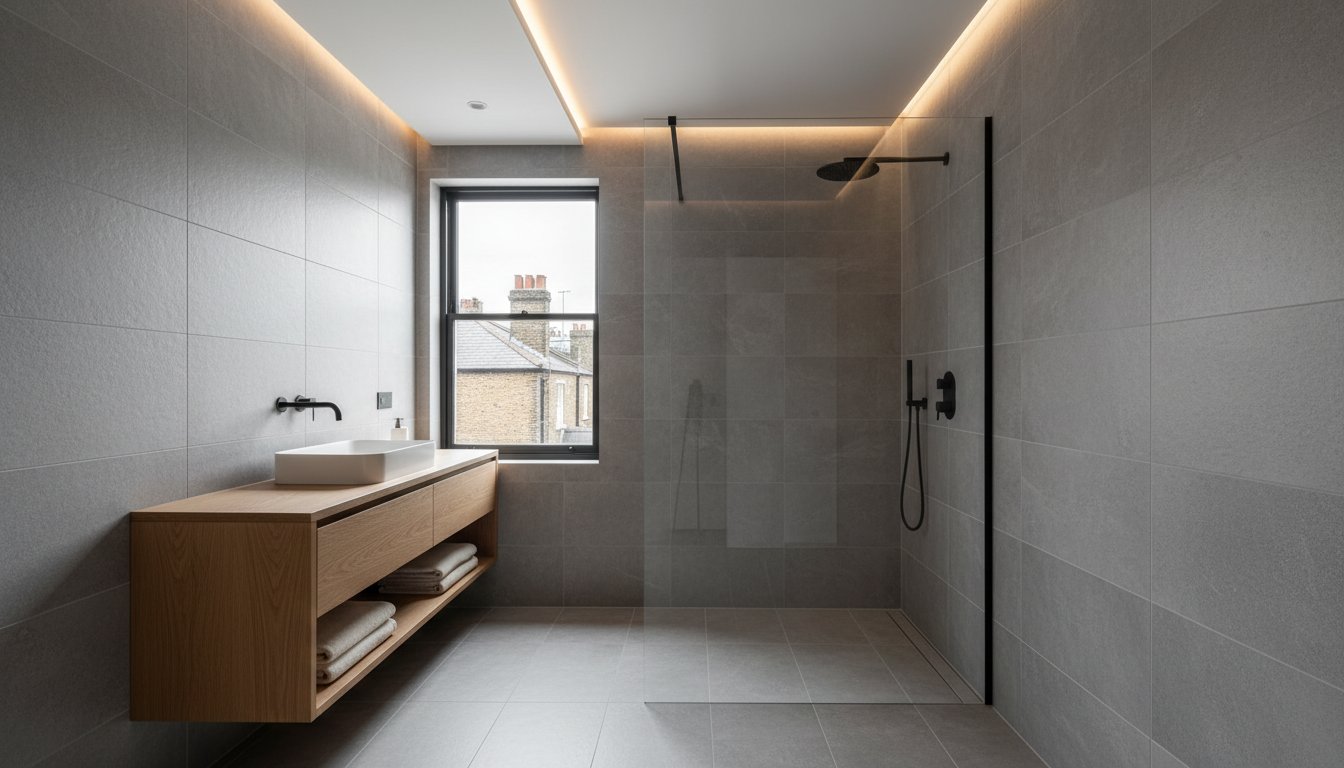
What if your smallest room could increase your property’s value by an average of 5% while removing every trip hazard in the house? Many homeowners in Romford and across South East London hesitate to make the switch because they fear a leak will ruin the kitchen ceiling below. It’s a valid concern, especially when you’re searching for reliable wet room installers who understand the specific structural needs of London’s Victorian terraces and modern Essex builds. You need a solution that looks stunning but remains completely watertight for decades.
You probably already know that a sleek, open-plan shower looks incredible, but the technical reality of tanking and drainage often feels overwhelming. We agree that your home deserves a premium finish without the stress of hidden costs or structural failures. This 2026 guide simplifies the entire process for you. You’ll discover the exact cost differences between a standard shower tray and a fully waterproofed room, along with the critical technical milestones that ensure a leak-proof finish. We’ll show you how to vet local tradespeople and provide the expert advice needed to secure a stylish, high-value bathroom.
Key Takeaways
-
Understand why professional tanking and specialist wet room installers are essential for creating a fully waterproof, level-access shower area that lasts.
-
Discover the technical secrets to a leak-proof finish, from mastering floor gradients to the correct application of waterproof membranes.
-
Compare the maintenance requirements and installation costs of "True Wet Rooms" versus popular hybrid walk-in showers for your Essex home.
-
Learn how to budget for the 20-30% price premium and navigate critical UK Building Regulations, including Part P and Part G compliance.
-
Find out how a three-year workmanship guarantee provides total peace of mind for homeowners across Romford and South East London.
Table of Contents
-
Planning Your Installation: Costs, Regulations, and Timelines
-
Why Parallel Plumbing is the Trusted Choice for London & Essex
What is a Wet Room and Why Choose a Specialist Installer?
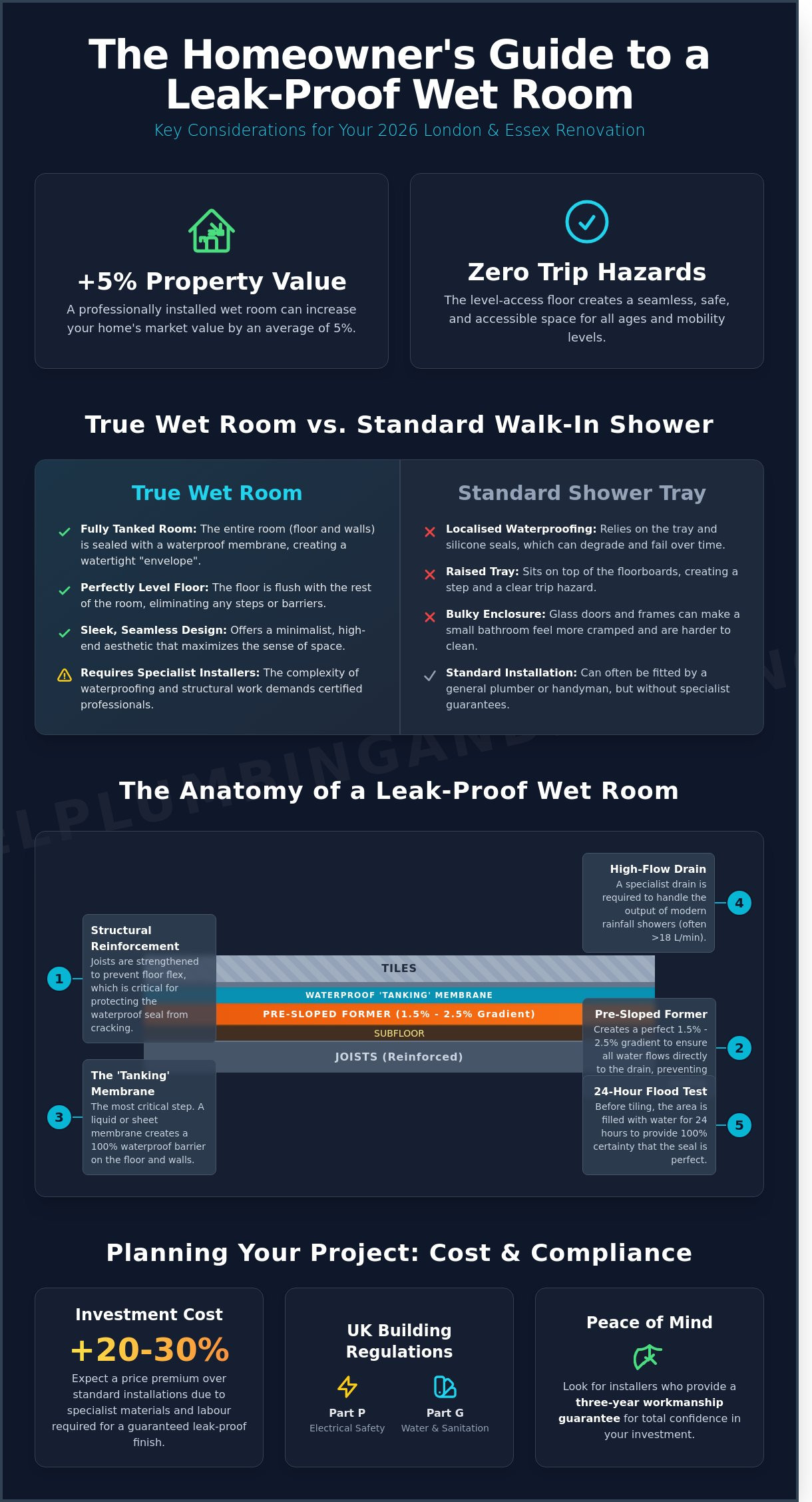
A wet room is a fully waterproofed, tanked bathroom where the floor is level with the rest of the room. It eliminates the need for a traditional stepped shower tray. If you are asking What is a wet room? it’s essentially a space where the entire floor and walls are sealed with a waterproof membrane. This design creates a seamless, open-plan environment that is both functional and high-end. While a general handyman might offer to tile a bathroom, you need specialist wet room installers to manage the structural waterproofing. Professional installers understand the precise sub-floor gradients required to ensure water flows toward the drain rather than pooling in corners.
London homeowners often choose wet rooms to maximise space in compact flats. Removing bulky enclosures makes a small bathroom feel significantly larger. For multi-generational homes, these installations provide essential accessibility. They remove trip hazards for elderly residents while maintaining a contemporary look. In newer Essex developments, wet rooms are a standard luxury feature. Conversely, in Romford renovations, they are a popular upgrade for older terrace houses where bathroom layouts are often cramped or awkwardly shaped.
The Aesthetic and Practical Benefits
Wet rooms offer a sleek, minimalist aesthetic that can increase property value in sought-after areas like Greenwich and Wapping. Because there are no shower trays or glass partitions to navigate, the room is incredibly easy to clean. You don’t have to worry about limescale building up in door tracks or grout lines on a raised tray. In South East London, where many Victorian conversions have narrow or L-shaped bathrooms, a wet room solves layout issues by removing the need for a fixed shower footprint. It allows for a more flexible use of the available square footage. For homeowners looking to go further with their renovation, exploring luxury bathrooms in SE London and Essex can provide inspiration for combining high-end design with expert installation.
Wet Rooms vs. Traditional Bathrooms
The primary difference between a wet room and a traditional bathroom is the installation depth and the tanking process. A standard shower sits on top of the floorboards. A wet room requires the floor to be lowered or a pre-formed tray to be inset into the joists. This ensures the floor remains flush. Tanking is the most critical safety step. It involves applying a liquid membrane or waterproof sheets to the entire room before tiling. This creates a watertight "envelope" that protects your home’s structure. This technical requirement is a vital part of your bathroom renovation strategy. Without expert wet room installers, you risk leaks that can cause thousands of pounds in structural damage to the joists and ceilings below.
The Technical Anatomy of a Leak-Proof Wet Room
Building a wet room is an exercise in precision engineering rather than just a simple bathroom refit. Professional wet room installers start the process by establishing a "former" or "tray" system. This pre-sloped base is manufactured to create a consistent gradient, usually between 1.5% and 2.5%, which ensures water travels directly to the drain. Without this exact "fall" in the floor, water pools in corners, leading to standing water and eventual grout deterioration.
In London’s Victorian terraces, especially across Peckham and Camberwell, the structural floor often requires significant preparation. These 19th-century timber joists weren’t designed for the weight of modern stone tiles and screed. We often reinforce the floor by "sistering" joists or installing extra noggins to provide a rigid, deflection-free surface. If the floor flexes even by 2mm, the waterproof seal can snap, which is why structural integrity is the first priority for any reputable installer.
Waterproofing and Tanking Standards
Tanking refers to the process of creating a completely sealed, internal envelope. You’ll typically choose between a liquid-applied compound or a fleece-backed sheet membrane. While liquid is excellent for awkward shapes, sheet membranes provide a guaranteed uniform thickness across the entire floor. Most failures occur at "transition zones" like internal corners or where pipes enter the floor. Experts use specialised corner tapes and pipe collars to bridge these gaps. Before tiling begins, we perform a 24-hour flood test. We plug the drain and fill the area with water to confirm the room is 100% watertight, providing total peace of mind for the homeowner.
Drainage and Plumbing Requirements
Your standard 40mm waste pipe might not be enough for a modern wet room. Many high-end rainfall showerheads deliver over 18 litres of water per minute, which can quickly overwhelm a basic drain. High-flow waste systems are essential to handle this volume. In many London flats with restricted floor depths, gravity alone won’t move the water. In these scenarios, we install a low-profile waste pump to ensure efficient drainage. It’s also vital to adhere to UK building regulations for ventilation to prevent humidity from damaging the structure. If you’re upgrading an older property, a professional plumber in Romford can verify that your existing pipework is up to code before the floor is sealed. If you need a technical assessment of your current bathroom layout, our local experts are ready to help you plan a safe, durable installation.
Wet Room vs. Walk-In Shower: Which Suits Your Home?
Choosing between a wet room and a walk-in shower depends on your budget and the structural layout of your property. A true wet room features a completely open design with no glass screens. The entire floor is tanked and sloped toward a drain. Professional wet room installers recommend this for maximum accessibility and a high-end feel. It costs more than a standard shower because the whole room must be waterproofed. Installation usually takes 5 to 7 days longer than a basic tray installation.
Many Essex homeowners choose a hybrid wet room. This setup uses a single glass screen to contain water spray while maintaining a level access floor. It’s a practical middle ground that keeps the rest of your bathroom furniture dry. If you live in Bermondsey and have a tighter budget, a walk-in shower with a low-profile tray is a smart alternative. It provides a similar aesthetic without the extensive structural work required for full tanking. Maintenance is simple for both, though glass screens in hybrid rooms will require regular cleaning to prevent limescale buildup.
The Role of Underfloor Heating
Underfloor heating is a vital component of any wet room. It does more than just keep your toes warm. The heat helps evaporate surface water quickly, which prevents dampness and stops mould from forming in the grout lines. For a successful underfloor heating installation, electric mats are often the best choice. They’re thin and sit directly in the tile adhesive, making them easy to integrate into a tanked floor without adding too much height.
-
Electric systems: Fast to install and perfect for retrofitting in small London flats.
-
Wet systems: Better for larger renovations where you can dig out the floor to accommodate pipes.
-
Hygiene: Dry floors reduce the risk of slips and keep the air quality higher.
Warm floors are a standard luxury feature in modern London homes. They provide a comfortable, dry environment that feels like a private spa. To keep your entire home running efficiently year-round, professional heating and air conditioning repair ensures your climate control systems work in harmony with your new wet room installation.
Space and Design Considerations
A wet room can make a tiny RM5 bathroom feel double the size. Removing bulky shower trays and enclosures opens up the floor plan and creates a seamless flow. You don’t have to choose a clinical look either. You can achieve a traditional bathroom aesthetic by using heritage-style tiles and brass fixtures over a modern waterproof base.
Safety is the most important factor when picking materials. Always choose tiles with a high slip resistance, typically an R10 or R11 rating. Our wet room installers ensure that every project meets current accessibility standards, making the space safe for all ages. Careful planning of the drainage gradient ensures that water never pools in the corners, protecting your home’s structure for decades.
Planning Your Installation: Costs, Regulations, and Timelines
A successful wet room relies on what happens beneath the tiles. You should budget for a 20% to 30% increase in costs compared to a standard bathroom suite. This premium covers essential structural preparation, including floor reinforcement and advanced waterproofing. Professional wet room installers prioritise these hidden elements because they prevent catastrophic leaks. In the UK, your project must comply with specific Building Regulations. Part P covers electrical safety, which is vital if you’re installing electric underfloor heating. Part G regulates sanitation and water efficiency. We ensure every installation meets these legal standards to protect your property.
Choosing the right team is about more than just the final look. Always ask to see a portfolio of tanking photos. A finished tile job looks great, but the waterproofing membrane underneath keeps your house dry. A proper installation takes between 7 and 14 days. This timeline allows for necessary drying periods between screeding, tanking, and tiling. If a contractor promises a three-day turnaround, they’re likely cutting corners on curing times. We don’t skip these steps because your home’s integrity depends on them.
Estimating the Cost in London & Essex
Costs in South East London and Essex reflect both high-quality materials and specialist labour. Membranes and high-flow drains represent a significant portion of the material spend. We operate with a strict "no hidden costs" policy so you aren’t surprised by structural plumbing bills halfway through the build. For larger properties or businesses, a commercial boiler installation is often necessary. These systems provide the high flow rates required for luxury bathrooms with rainfall showers without losing pressure.
Questions to Ask Your Wet Room Installer
-
What tanking system do you use and what is the guarantee period? Look for reputable brands like Schluter or Ardex that offer long-term peace of mind.
-
How do you ensure the floor gradient is correct for my specific floor type? Whether it’s timber joists or concrete, the fall must be precise to prevent water pooling.
-
Are you Gas Safe registered and insured for structural plumbing work? This is non-negotiable for safety and insurance validity.
Ready to upgrade your home with a leak-proof finish? You can book a site survey with our expert wet room installers today.
Why Parallel Plumbing is the Trusted Choice for London & Essex
Choosing between wet and electric underfloor heating involves more than just picking a product. You need a team that understands the structural and technical demands of your property. Parallel Plumbing and Heating provides a "Safe Pair of Hands" for every project. We back our expertise with a 3-year workmanship guarantee on all wet room and bathroom installations. This gives you long-term security that your investment is protected. We believe in total transparency. You will receive clear, fixed quotes with no hidden costs or surprise fees at the end of the job.
Safety is our absolute priority. Our engineers are Gas Safe registered and follow rigorous industry standards. We also understand that plumbing issues don’t follow a schedule. That is why we provide 24/7 emergency availability. Whether it is a post-installation query or an urgent maintenance need, our local experts are always a phone call away. We treat your home with respect, ensuring every workspace is left clean and functional.
Our Local Commitment to Quality
Our team operates daily across South East London and Essex. We have extensive experience working in neighbourhoods like Deptford, Peckham, and East Dulwich. Many older London properties feature Victorian or Edwardian architecture, which presents unique plumbing challenges. We specialise in adapting modern heating technology to these traditional structures. As professional wet room installers, we know how to manage floor reinforcements and drainage gradients in confined city spaces. We focus on tidy workmanship. We use protective coverings and clear away all debris to ensure minimal disruption to your household.
Ready to Transform Your Bathroom?
A high-quality wet room increases your home’s value and provides a sleek, modern aesthetic. It is a practical solution that offers better accessibility and easier maintenance. As experienced wet room installers, we help you navigate the technical choices between wet and electric systems to find the perfect fit for your budget. We offer no-obligation design consultations for homeowners in Romford and throughout Essex. Our experts will assess your current boiler capacity and floor heights to provide a realistic, efficient plan.
Don’t leave your home’s comfort to chance. Contact Parallel Plumbing and Heating today to discuss your project. We provide the local expertise and reliable service you need for a stress-free renovation.
Book your free quote now to start your bathroom transformation.
Start Your Romford Wet Room Transformation Today
A successful wet room requires more than just high-end tiles; it demands precision engineering and expert tanking to prevent costly leaks. Choosing professional wet room installers ensures your project meets the strict 2026 building regulations and provides a durable, level-access solution that adds real value to your property. By opting for a specialist team, you avoid the technical pitfalls of poor drainage or inadequate waterproofing that often plague standard bathroom renovations.
Parallel Plumbing and Heating provides the local expertise Romford homeowners trust. Our Gas Safe registered engineers deliver every project with a 3-Year Workmanship Guarantee, ensuring your new space is as safe as it is stylish. We operate a strict no hidden costs policy, so the price we quote is the price you pay. Whether you’re in Essex or South East London, we’re ready to bring your vision to life with professional efficiency and tidy workmanship.
Book Your Expert Wet Room Consultation in Romford & South East London Today. Your dream bathroom is just a phone call away.
Frequently Asked Questions
Is a wet room more expensive than a regular bathroom?
A wet room typically costs 25 per cent more than a standard bathroom installation because of the technical tanking and drainage requirements. You’ll spend more on professional waterproofing and structural floor preparation to ensure the space is completely watertight. This investment often adds value to your property. Some UK estate agents suggest a high-quality wet room can increase a home’s total market value by 5 per cent.
Can you install a wet room on a wooden floor in an old London house?
You can install a wet room on wooden joists in older London properties by using a reinforced floor former and a decoupling membrane. Experienced wet room installers will strengthen the existing timber structure to prevent any movement. This process ensures the waterproof seal remains intact even as the old house settles or shifts over time. It provides a modern solution for period homes.
Do wet rooms leak more often than traditional showers?
Wet rooms don’t leak more than traditional showers when they’re fitted by qualified professionals using modern tanking systems. A fully tanked room provides a secondary layer of protection that standard shower trays lack. Most reputable manufacturers provide a 15 year guarantee on their waterproofing membranes. This ensures your home stays dry and protected for over a decade without the risk of water damage.
How long does it take for a wet room to dry after a shower?
A wet room floor usually dries within 40 minutes if you have underfloor heating installed. Without heating, surface water can linger for up to 2 hours depending on the room’s ventilation levels. Good airflow through a 15 litre per second extractor fan helps speed up this process. It also prevents mould growth on your grout and sealant by keeping humidity levels low.
Do I need building regulations approval for a wet room in the UK?
You must comply with Building Regulations, specifically Part P for electrical work and Part G for sanitation and hot water safety. Our engineers are Gas Safe registered and provide transparent pricing with no hidden costs for these essential safety checks. Certification is essential when you decide to sell your home. It proves the work meets the 2010 Building Regulations standards for safety.
Is underfloor heating necessary for a wet room?
Underfloor heating isn’t a legal requirement, but it’s highly recommended to help evaporate surface water quickly. It transforms the comfort of the room and helps keep the space hygienic by reducing dampness. Our wet room installers often suggest electric mats for smaller retrofits or water-based systems for larger renovation projects. This keeps the floor warm and speeds up the drying time significantly.
What are the best tiles for a wet room floor to prevent slipping?
Choose tiles with a minimum R11 slip-resistance rating or small mosaics to ensure safety underfoot. Mosaic tiles provide extra grip because the increased number of grout lines creates a naturally textured surface. Porcelain is a top choice because it has a low porosity rate of less than 0.5 per cent. This makes it incredibly durable in wet environments and easy to maintain over time.
How do I maintain a wet room to ensure it stays waterproof?
You should inspect the silicone sealant and grout lines every 12 months for any signs of wear or cracking. If you have natural stone tiles, apply a fresh coat of specialist sealer every 2 years to maintain the barrier. Keeping the drain clear of hair and debris ensures water flows away quickly. This prevents unnecessary pressure on the waterproof seals and keeps the system working efficiently.