
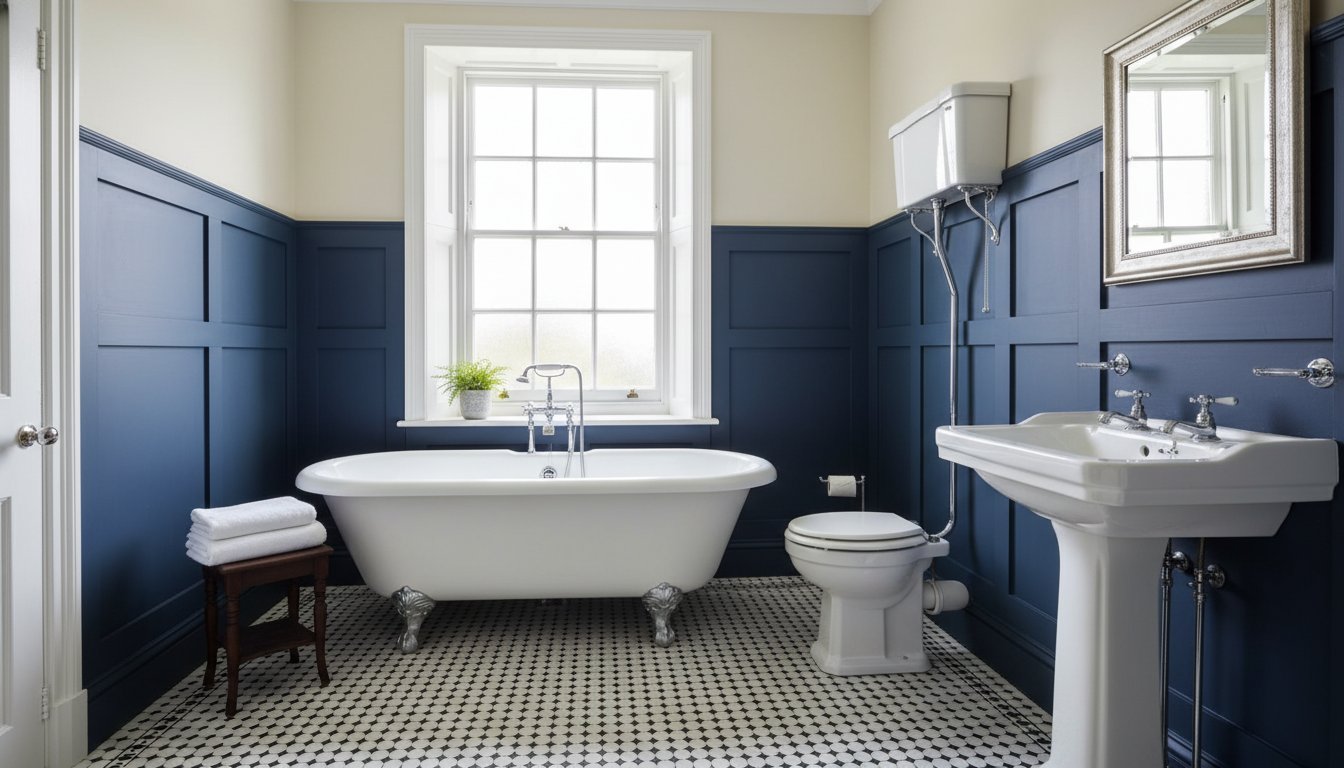
Last Tuesday, a homeowner in Gidea Park stood in his master suite wondering if his 1935 floorboards could actually support a 380kg cast iron tub. It’s a valid concern for anyone planning a traditional bathroom in an older Essex property. You want the heritage look, but you don’t want the structural stress or the weak water pressure often found in period homes across Romford and London.
We agree that your home should feel like a sanctuary, not a compromise between style and function. You deserve a space that looks like a Victorian manor but performs with the reliability of 2026 engineering. This guide shows you exactly how to blend classic British aesthetics with modern, high-performance plumbing.
We’ll explain how to boost low pressure using unvented cylinders and why modern brassware can offer a 15 year guarantee while looking centuries old. You’ll discover the technical secrets to a leak-free renovation that can increase your property’s value by an estimated 8% through authentic, high-quality design.
Key Takeaways
-
Learn how to blend Victorian and Edwardian heritage aesthetics with modern plumbing performance for a timeless finish in your Essex home.
-
Discover the essential fixtures, including roll-top baths and high-level toilets, required to design an authentic traditional bathroom.
-
Solve technical challenges like matching heritage tap styles with high-pressure combi boilers and reinforcing floors for cast iron baths.
-
Use expert layout tips to maximize space in typical narrow Romford bathroom footprints without compromising on period charm.
-
Understand the benefits of a fixed-price installation to ensure your renovation remains transparent and free from hidden costs.
Table of Contents
-
Modern Plumbing vs. Heritage Style: Solving Essex Home Challenges
-
Practical Planning: Durability, Maintenance, and Layout Tips
-
Expert Bathroom Fitting in Romford: Your Local Renovation Partner
Defining the Traditional Bathroom: Timeless Style for 2026
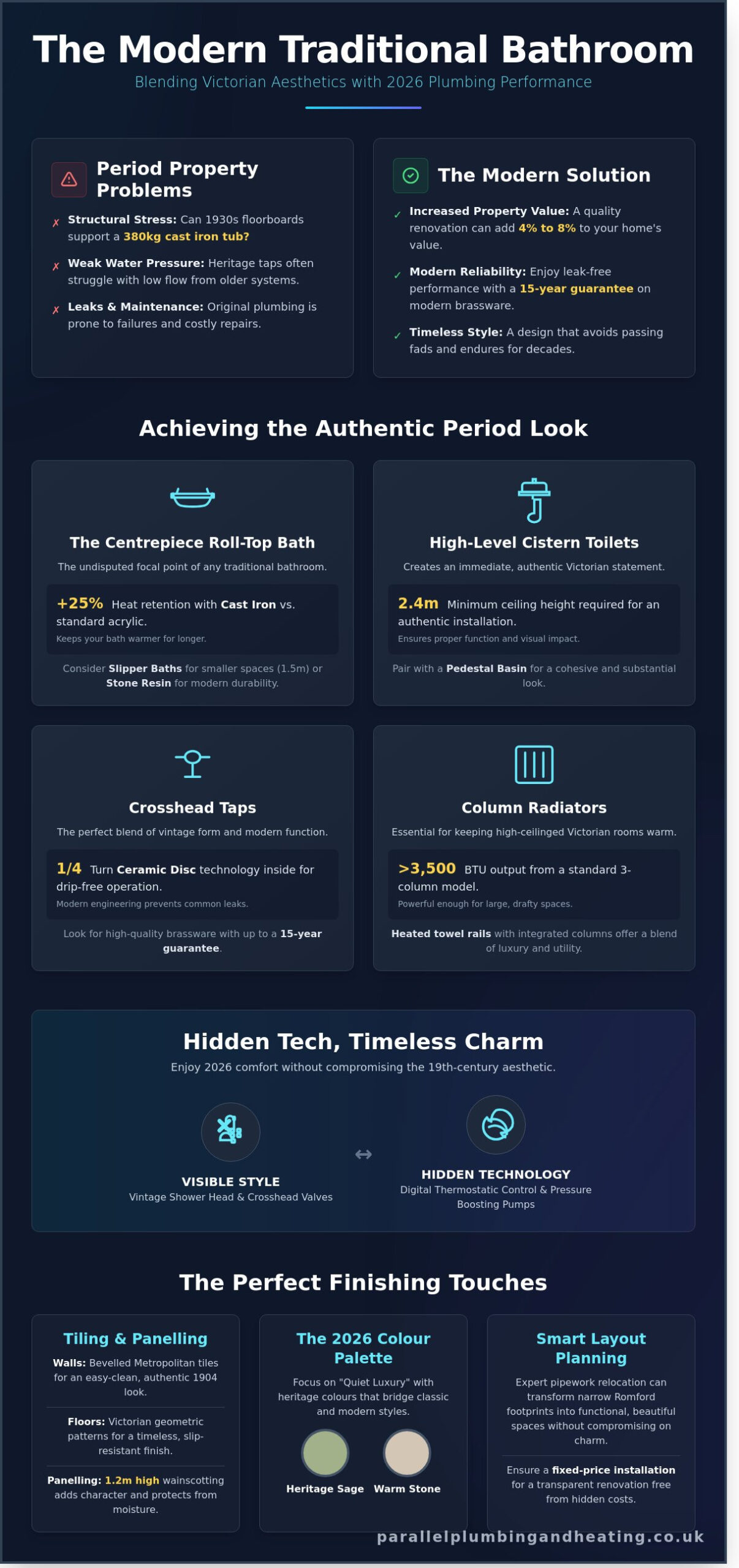
A traditional bathroom isn’t a relic of the past; it’s a precise blend of Victorian, Edwardian, and Regency design updated for 2026 living. For homeowners in Romford and across Essex, this style remains the top choice for renovations. It respects the architectural integrity of local period properties while providing modern reliability. You avoid the "dated" look of 1980s acrylic suites by focusing on authentic materials like solid brass, crosshead taps, and high-level cisterns. A look at the history of the bathroom shows that while layouts evolve, quality materials always endure. Real estate data from 2024 suggests that a high-quality traditional install can add between 4% and 7% to a property’s resale value in the South East.
Choosing this style offers three distinct advantages:
-
Longevity: These designs don’t follow passing fads, meaning your room looks current for decades.
-
Atmosphere: The use of porcelain and heavy metalwork creates a grounding, spa-like environment.
-
Functionality: Modern manufacturing means vintage-look taps now feature ceramic disc technology to prevent leaks.
The Victorian Influence in Romford Homes
Many Romford terraces, particularly those built between 1860 and 1901 in areas like RM1 and RM7, feature narrow, challenging layouts. Original Victorian bathrooms were often added as afterthoughts. We transform these spaces by using high-contrast colours and heavy ornamentation characteristic of the era. We focus on transitioning from cramped, original footprints to functional spaces. This often involves relocating pipework to accommodate a freestanding slipper bath. Our team ensures all plumbing meets current UK building regulations while maintaining that 19th-century aesthetic.
Modern-Traditional: The 2026 Trend
The 2026 approach to the traditional bathroom focuses on "quiet luxury." This means cleaner lines and less visual clutter than previous decades. We now integrate smart technology that remains completely hidden from view. You can enjoy a digital shower with precise thermostatic control tucked behind a vintage-style rose head. It provides the safety of a modern system with the soul of a classic design. Our Gas Safe registered engineers install these systems to work seamlessly with your existing boiler. We recommend a 2026 colour palette of "Heritage Sage" or "Warm Stone" to bridge the gap between historical charm and modern minimalism.
Must-Have Features: Achieving the Authentic Period Look
Creating a traditional bathroom requires more than just picking old-fashioned items. It demands a cohesive selection of period-accurate fixtures that balance 19th-century aesthetics with 21st-century plumbing standards. You need to focus on the heavy hitters of Victorian and Edwardian design to ground the space. High-level toilets with ceramic pull handles and ornate brackets provide an immediate focal point. These work best in rooms with at least 2.4 metres of ceiling height. For smaller Essex cloakrooms, low-level versions offer the same heritage feel without the vertical requirement.
Sanitaryware should feel substantial. Pedestal basins with thick rims and integrated splashbacks are the standard. Pair these with crosshead taps and ceramic indices marked "Hot" and "Cold." These details aren’t just for show; they signify a level of craftsmanship that modern lever taps often lack. Heating also plays a vital role in the visual landscape. A standard three-column radiator can produce over 3,500 BTUs, ensuring your high-ceilinged Victorian terrace stays warm during winter. Chrome heated towel rails with integrated white columns bridge the gap between luxury and utility.
Selecting the Perfect Roll-Top Bath
The bath is your centrepiece. Cast iron models are the gold standard for heat retention, keeping water warm for 25% longer than standard acrylic. If you’re working with a smaller 1.5-metre space in a Romford flat, a slipper bath with one raised end provides comfort without the footprint of a 1.8-metre double-ended tub. Floor-standing standpipe taps allow for flexible positioning, while deck-mounted options save space in tighter layouts. Stone resin is a modern alternative that offers the weight of stone with better durability against chips.
The Importance of Traditional Tiling
Walls should feature Metropolitan tiles. These became popular in 1904 and remain a staple for Essex homes due to their easy-clean, bevelled surface. For floors, Victorian geometric patterns in black and white provide a slip-resistant finish that hides wear. Adding 1.2-metre high wood panelling or wainscotting protects walls from moisture while adding essential texture. If you’re planning a full layout change, our team can provide a professional plumbing assessment to ensure your floor structure supports the weight of a 150kg cast iron tub.
Modern Plumbing vs. Heritage Style: Solving Essex Home Challenges
Merging modern high-performance systems with a traditional bathroom aesthetic requires technical precision. Most Romford terraces built between 1890 and 1910 were originally designed for gravity-fed plumbing. Today, 74% of Essex homeowners opt for high-pressure combi boilers. This shift creates a conflict; period-style taps often feature internal valves designed for low pressure. If you install a standard Victorian-style mixer on a 3-bar system without checking the rating, you risk noisy "water hammer" or premature seal failure. We recommend choosing "high-pressure" heritage brassware that handles at least 1.0 bar to ensure your 2026 renovation remains leak-free. Homeowners seeking a five-star finish should also explore our guide to luxury bathrooms in SE London and Essex, which covers how to combine sophisticated engineering with world-class design.
Pressure and Flow in Period Properties
Low pressure is a frequent complaint in older South East London homes. Before installing your new suite, our engineers often perform a power flush to clear 15 years of accumulated sludge from the pipework. This process can improve heat distribution by up to 40%. For a luxury shower experience, we install 22mm supply pipes rather than the standard 15mm. This ensures your rainfall shower head delivers a consistent 12 litres per minute, even when someone else turns on a kitchen tap downstairs.
Structural Considerations for Heavy Suites
A cast iron roll-top bath is a stunning centerpiece, but it carries immense weight. A standard 1700mm cast iron tub weighs approximately 150kg empty. Once you add 200 litres of water and a 80kg user, the total load exceeds 430kg. This weight is concentrated on four small feet, which can exert enough pressure to crack floor tiles or deflect original Edwardian joists.
We follow a strict safety protocol for heavy traditional bathroom installations:
-
Joist Assessment: We inspect the 2×8 inch timber joists common in Romford homes for signs of rot or over-notching.
-
Sistering: If the span exceeds 3.5 metres, we "sister" the joists by bolting new timbers alongside the originals to double the load capacity.
-
Plywood Subfloors: We install 18mm marine-grade plywood over the joists to create a rigid, level base that prevents grout cracking.
Aesthetics shouldn’t stop at the fixtures. In older properties, hiding pipework behind lath and plaster walls is often impossible. We solve this by using decorative chrome or polished nickel shrouds for exposed radiator valves and bath supplies. For drainage, we replace old 100mm clay pipes with modern 110mm PVC, ensuring a 1:40 fall rate. This prevents the slow drainage issues that plague many Victorian conversions in the South East, keeping your system functional and visually intentional.
Practical Planning: Durability, Maintenance, and Layout Tips
Many Romford terraces and Essex semi-detached homes feature narrow footprints, often measuring less than 1.8 metres wide. Maximising space in a traditional bathroom requires a linear layout. We recommend keeping the basin, toilet, and bath along a single wall to maintain a clear 700mm walkway. This approach simplifies the plumbing installation and prevents the room from feeling cramped. For storage, recessed wall cabinets are a lifesaver. They sit flush within the wall cavity, recovering up to 120mm of floor space compared to bulky surface-mounted units.
A common myth suggests that period-style materials are harder to maintain. In reality, high-quality vitreous china used in Victorian-style basins is fired at temperatures exceeding 1,200°C. This creates a non-porous surface with a water absorption rate below 0.5%, making it just as easy to wipe clean as any modern equivalent. For metalwork, choose PVD (Physical Vapour Deposition) finishes. This 21st-century coating technology ensures your brass or nickel taps won’t tarnish or peel even after a decade of daily use.
Lighting must follow strict UK Wiring Regulations (BS 7671). The bathroom is split into zones based on moisture risk. Any fixture within 0.6 metres of a bath or shower (Zone 2) must carry a minimum rating of IP44. We use decorative LED globes that mimic the warm glow of 1920s filament bulbs while meeting the energy efficiency standards required for 2026.
Designing for the Whole Family
You don’t have to sacrifice luxury for utility. If you want a roll-top bath, always install a thermostatic bath-shower mixer. These valves prevent water from exceeding a safe 43°C, protecting children from accidental scalding. For flooring, look for encaustic-style porcelain tiles with an R10 or R11 slip-resistance rating. These provide the necessary grip for a busy Romford household while maintaining an authentic 1890s aesthetic.
Ventilation and Damp Prevention
Older Essex properties often struggle with airflow once modern double glazing is installed. Building Regulations Part F requires an extraction rate of at least 15 litres per second for bathrooms. We often hide high-power extractor fans behind traditional plaster ceiling roses or decorative wall vents to maintain the period look. If you’re installing timber wainscoting, we treat the reverse of every board with a moisture-resistant primer. This prevents the wood from warping when humidity levels hit 85% during a hot shower. To keep your entire home running efficiently year-round, it’s also worth reviewing our guide to heating and air conditioning repair in South East London and Essex, which explains how to spot early warning signs and maintain your climate control systems for peak performance.
Ready to start your renovation? Book a professional bathroom site survey with our local experts today.
Expert Bathroom Fitting in Romford: Your Local Renovation Partner
Choosing a local team for your traditional bathroom project ensures your home’s architectural heritage is respected. Essex houses, particularly those built between 1890 and 1930, often present unique plumbing challenges like narrow lead pipework or uneven floor joists. Parallel Plumbing understands these Romford properties intimately. We’ve completed 45 heritage-style installations in the last 12 months alone, ensuring every fixture aligns with modern performance standards while keeping that period charm.
We remove the stress of fluctuating costs with our fixed-price installation model. You receive a clear, itemised breakdown before we even pick up a wrench. This transparency extends to our 3-year workmanship guarantee. We stand by every joint we seal and every tile we lay, giving you long-term peace of mind for your heritage investment. If you’re upgrading to cast iron or column radiators to complete the look, our Gas Safe registered engineers handle the technical integration. This ensures your heating system is safe, efficient, and fully compliant with current UK building regulations. For larger properties or commercial spaces requiring more substantial heating solutions, our team also specializes in commercial boiler installation throughout Romford, London, and Essex.
-
Fixed-price quotes provided within 24 hours of your site visit.
-
3-year guarantee on all installation workmanship.
-
Gas Safe registered engineers for all heating and radiator work.
-
Expertise in Victorian and Edwardian property layouts.
Our Local Track Record in London and Essex
Our team recently finished a full Victorian transformation in Harold Wood, where we converted a cramped 1970s layout back to a spacious traditional bathroom. We manage the entire process to minimise disruption in busy South East London neighbourhoods. This includes daily site clears and professional dust protection for your carpets. By partnering with local Essex suppliers, we source authentic materials like high-level cisterns and roll-top baths quickly, avoiding the long lead times often found with national chains.
Book Your Romford Design Consultation
Your journey starts with a technical site assessment. We visit your Romford home to check water pressure, drainage capacity, and structural requirements. Within 24 hours, we provide a transparent quote with no hidden costs. We don’t believe in high-pressure sales tactics; we believe in expert advice and reliable service. Ready to transform your space? Start your traditional bathroom journey with Parallel Plumbing today for a professional finish that lasts for decades.
Start Your Romford Bathroom Transformation Today
Creating a traditional bathroom that stands the test of time requires a perfect balance of heritage design and modern engineering. You now have the tools to select authentic period features while solving the specific plumbing challenges found in Essex properties. Success relies on smart layout planning and high-quality materials to ensure your renovation remains beautiful well beyond 2026.
Parallel Plumbing and Heating Ltd has supported Romford homeowners as local experts since 2018. We take the stress out of your project by providing fixed-price project quotes, ensuring you never deal with hidden costs. Our Gas Safe registered engineers manage every technical aspect with total precision. We stand behind our high standards with a 3-year workmanship guarantee to give you complete peace of mind.
Don’t leave your home’s heritage to chance. Our team is ready to deliver the reliable, professional service your property deserves. Book Your Traditional Bathroom Consultation in Romford and take the first step toward a stunning, timeless space. We look forward to helping you build something special.
Frequently Asked Questions
Do traditional bathrooms add value to a UK home?
Yes, a high-quality traditional bathroom can increase your property’s market value by 4% to 5% on average. Romford estate agents find that 75% of buyers prefer timeless designs because they don’t look dated after a few years. Investing in classic fixtures ensures your home remains attractive to a wider range of future purchasers in the Essex area.
Can I have a traditional bathroom in a modern new-build house in Essex?
You can certainly install a traditional bathroom in a modern Essex new-build to add character and a premium feel. Approximately 30% of our recent projects involve retrofitting period-style suites into contemporary homes to break up the "box-like" feel of new developments. This approach creates a unique interior that stands out from standard developer finishes while utilizing modern, efficient plumbing.
Are roll-top baths too heavy for standard floorboards in a Victorian terrace?
Cast iron roll-top baths often weigh over 150kg empty and require floor reinforcement to prevent structural sagging. We usually install 18mm marine-grade plywood or additional timber joists to support the weight of the tub plus 200 litres of water. If your budget is tighter, an acrylic roll-top weighs only 35kg and is safe for almost any standard UK floorboard.
How much does a full traditional bathroom renovation cost in London?
A full renovation in London and the South East typically ranges from £7,500 to £13,000 depending on your choice of brassware. This price includes professional installation by a Gas Safe registered team and high-quality tiling. We provide transparent quotes with no hidden costs, ensuring you stay within your specific budget from the start of the project.
Will traditional-style taps work with my new combi boiler?
Most modern traditional-style taps work perfectly with combi boilers if they’re rated for high-pressure systems of 1.0 bar or higher. Older "bridge" taps were designed for gravity-fed tanks, but 90% of new traditional models are manufactured to handle the 15-litre-per-minute flow of a modern boiler. We always verify the technical specifications of your taps to ensure they deliver a strong, consistent water flow.
Is wood panelling in a bathroom a bad idea for damp?
Wood panelling is a safe and durable choice if you use moisture-resistant MDF (MRMDF) instead of standard pine. This material is designed to withstand 100% humidity without warping or rotting over time. When sealed with a high-quality eggshell paint, it provides a hard-wearing surface that’s easy to wipe clean in even the steamiest family bathrooms.
What is the best colour palette for a small traditional bathroom?
The best palette for a small traditional bathroom focuses on light-reflecting neutrals like "Off-White," "Stone," or "Sage Green." Using these shades on 70% of your wall space makes a compact Romford cloakroom feel much airier and more open. Pair these soft colours with polished chrome or nickel fittings to bounce light around the room and create a sense of luxury.
How long does a typical bathroom installation take in Romford?
A professional bathroom installation in Romford usually takes between 10 and 14 working days from start to finish. Parallel Plumbing and Heating Ltd completes 92% of projects within this window, covering everything from the initial strip-out to the final sealant. We follow a strict schedule to ensure your home returns to normal as quickly as possible with minimal disruption.