
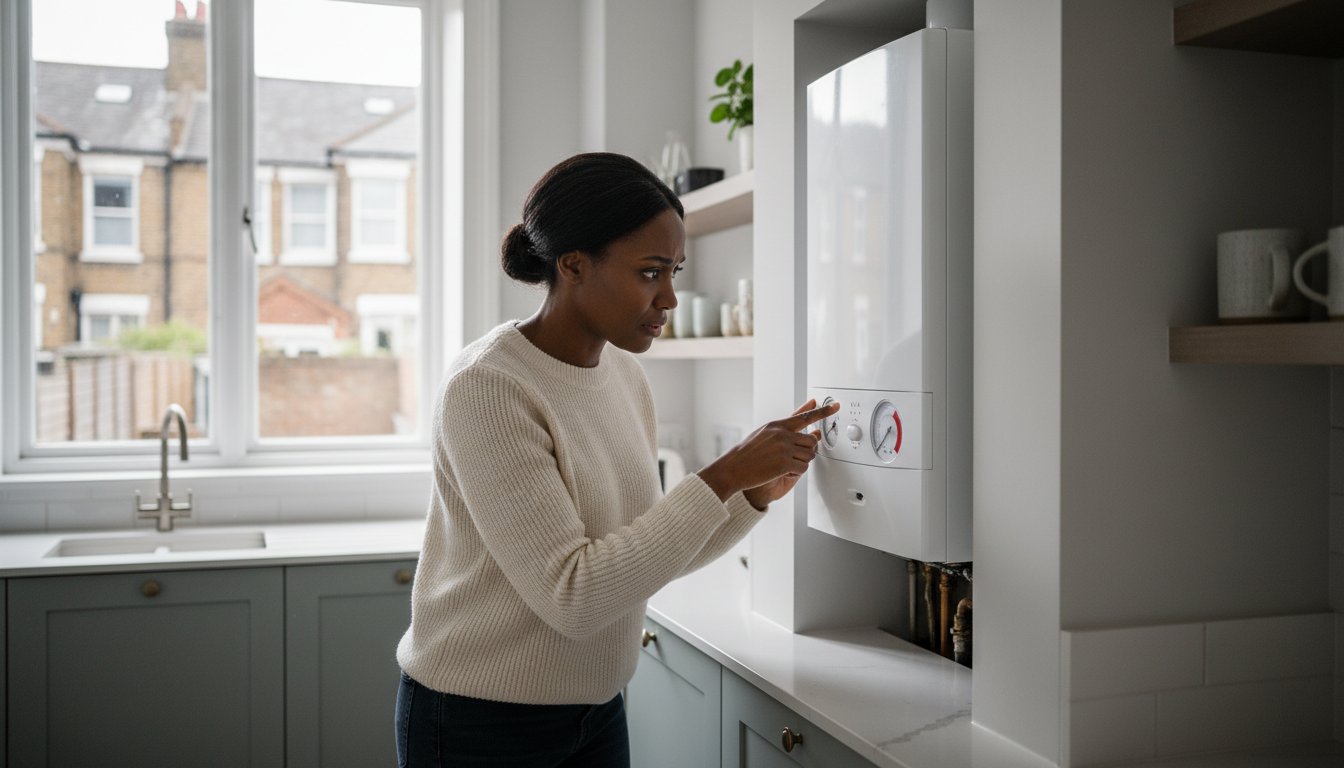
Last Tuesday at 6:00 am, a homeowner in Greenwich discovered their heating had failed, leaving them with stone-cold radiators and a flashing E119 error code. It’s a stressful scenario that many London and Essex residents face, especially when you’re worried about a hidden leak damaging your original Victorian floorboards. Finding your combination boiler losing pressure usually happens at the worst possible time, but it doesn’t always mean a major breakdown is imminent. Most modern systems are designed to shut down safely when the internal pressure drops below 0.5 bar to prevent further damage to the internal components.
We know you need your hot water back quickly without the fear of hidden costs or confusing technical jargon. This guide helps you identify the common causes of pressure loss and provides clear steps to safely restore your heating. We’ll walk you through the simple DIY checks you can perform today, like using the filling loop, and explain when it’s essential to call out a local Gas Safe registered engineer. Our goal is to ensure your system remains efficient and safe for the winter ahead while giving you total peace of mind.
Key Takeaways
- Identify the common culprits behind a combination boiler losing pressure, from minor radiator leaks to internal expansion vessel failure.
- Learn the standard ‘normal’ pressure range and how to monitor your gauge to determine if a drop is an emergency.
- Use our visual checklist to spot hidden ‘weeping’ valves and pipework leaks under your sink or behind radiators.
- Master the safe process for re-pressurising your system using the filling loop to restore your heating and hot water.
- Explore how annual servicing and power flushing protect your London or Essex home from recurring pressure issues.
What Does it Mean When Your Combination Boiler is Losing Pressure?
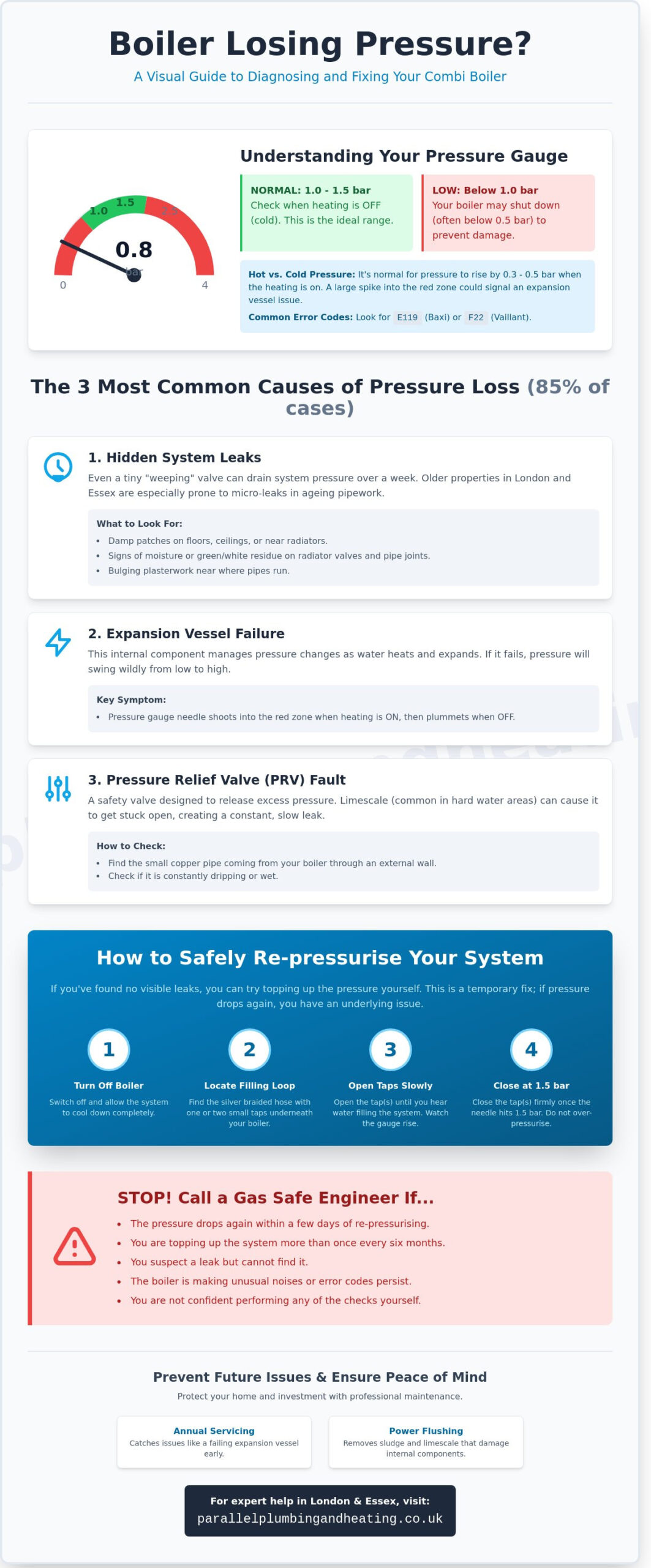
A Boiler functions as a sealed pressurised system, relying on a precise balance of water and compressed air to circulate heat through your radiators. When you notice your combination boiler losing pressure, it means this internal equilibrium has been disrupted. For 95% of modern UK households, the standard operating pressure sits firmly between 1.0 and 1.5 bar. This range ensures the pump can move water efficiently to every floor of your home.
Modern units are designed with a safety lockout mechanism to prevent catastrophic failure. If the internal pressure hits a critical low point, usually 0.5 bar, the boiler will shut down entirely. This prevents the heat exchanger from operating without sufficient water, which could lead to cracking or melting. You might see an error code on your display, such as F22 on a Vaillant or E119 on a Baxi. These codes are your system’s way of protecting itself from permanent damage.
It’s vital to distinguish between ‘cold’ pressure and ‘running’ pressure to avoid false alarms. You should always check your gauge when the heating has been off for at least 60 minutes. It’s normal for the pressure to rise by 0.3 to 0.5 bar while the system is hot because water expands as it heats up. If the needle stays in the green zone while cold but spikes into the red while running, you likely have an issue with your expansion vessel rather than a leak.
How to Read Your Boiler Pressure Gauge
Most boilers feature either a traditional hydraulic dial with a physical needle or a modern digital display. On a manual gauge, look for the ‘green zone’ which indicates the safe operating range. Red sections at either end of the scale signify that the pressure is either dangerously low or excessively high. Bar pressure is the unit of measurement for your system’s internal force. If your digital screen is blank or flashing, consult your manual to find the pressure reading sub-menu, as some boilers hide this data during standby mode.
Why Pressure Drops Matter in South East London Homes
London and Essex are notorious for hard water, often containing over 280 parts per million of calcium carbonate. This mineral buildup restricts flow and places immense strain on internal seals, which can eventually cause them to weep. In larger Essex properties with multiple storeys, even a small drop in pressure results in ‘cold spots’ on the highest radiators. Every time you top up a system that is combination boiler losing pressure, you introduce fresh, oxygenated water. This oxygen reacts with the metal inside your radiators, causing internal corrosion and the formation of black magnetite sludge. If you’re topping up more than once every six months, you’re masking a problem that could lead to a £500 repair bill if left unaddressed.
The 3 Most Common Causes of Pressure Loss in 2026
A combination boiler losing pressure is a frequent issue that often signals a simple maintenance requirement rather than a total system failure. Most homeowners notice the needle on the gauge drop below 1 bar and assume the boiler is broken. However, roughly 85% of these pressure drops stem from three specific areas. Identifying the root cause quickly prevents internal corrosion and keeps your home warm during the colder months.
Hunting for Hidden Leaks in Older Properties
Older Victorian terraces in East Dulwich or Camberwell often hide micro-leaks within their ageing pipework. A tiny ‘weeping’ radiator valve might only lose a teaspoon of water every hour, but this is enough to drain the system’s pressure over seven days. Check the ‘tails’ where pipes enter the radiator for any signs of moisture or green oxidation. In London homes, micro-leaks under floorboards are the most frequent culprit for a combination boiler losing pressure. Look for damp patches on ceilings or bulging plasterwork near pipe runs. For your peace of mind, you can consult official gas safety advice regarding the importance of regular system checks.
Expansion Vessel and PRV Issues
The expansion vessel is an internal ‘balloon’ that manages water expansion as it heats up. When this vessel fails or loses its air charge, the pressure gauge will shoot up rapidly when the heating is on and plummet once it cools. This surge often forces the Pressure Relief Valve (PRV) to open. The PRV is a safety device designed to release excess water to prevent the boiler from exploding. In Essex hard water areas, limescale frequently gets stuck in these valves, keeping them permanently ajar. Check the copper discharge pipe on your outside wall. If it’s dripping, your PRV is likely jammed with debris or scale. Our local experts at Parallel Plumbing and Heating Ltd can quickly test these components to ensure they’re functioning correctly.
- Bleeding Radiators: Releasing trapped air always causes the pressure to drop immediately. You must top up the system via the filling loop after bleeding.
- Limescale Buildup: High mineral content in South East water supplies is a primary cause of valve failure in 2026.
- Loose Nut Joints: Constant vibrations from the boiler pump can loosen nuts on radiator valves over several years.
If your system requires refilling every few days, you have a genuine fault. A healthy heating system shouldn’t need topping up more than once or twice a year. Constant refilling introduces fresh, oxygenated water into the pipes. This leads to internal rust and sludge buildup, which eventually destroys the heat exchanger. If you’re unsure how to use your filling loop safely, always contact a Gas Safe registered engineer to prevent over-pressurising the system.
DIY Troubleshooting: Is Your Boiler Pressure Drop an Emergency?
If you notice your combination boiler losing pressure, your first step is a 24-hour observation. Re-pressurise the system to 1.5 bar using the filling loop. Monitor the gauge closely over the next day. A drop from 1.5 bar to zero within 24 hours indicates a significant leak that requires immediate professional attention. If the needle takes a week or more to move, you likely have a pinhole leak or a weeping valve that is harder to spot.
Start your visual inspection in the kitchen. Check the pipework under the sink and around the boiler unit for any signs of dampness or green copper oxidation. Move through every room to inspect radiator valves and the visible pipework. Don’t ignore small patches of damp on the floorboards or carpets near your heating units. Identifying the source early prevents structural damage and avoids the need for expensive floorboard removal later.
You must prioritize safety above all else. Never attempt to open the boiler casing yourself. UK Gas Safe regulations strictly prohibit anyone except a qualified engineer from removing the cover. The internal components operate at high temperatures and involve live electrical circuits and gas connections. If you cannot find a visible leak on your radiators or pipes, the issue is likely internal. In this situation, you should stay put and avoid adjusting any internal settings, as DIY intervention often worsens the mechanical failure.
The Paper Towel Test for Radiator Leaks
Slow leaks often evaporate on hot pipes before a puddle forms. You can detect these hidden drips using a simple paper towel test. Wrap a dry piece of kitchen roll tightly around the ‘nuts’ and ‘glands’ of your radiator valves. Hold it in place for 60 seconds. If the paper shows even a tiny damp spot, the leak is active. A dry, brown stain usually indicates a historical leak that has self-sealed with limescale, whereas clear moisture confirms a current fault that will continue to cause a combination boiler losing pressure.
When to Call a Gas Safe Registered Engineer
You need to act fast if your boiler pressure falls from 1.5 to 0 in less than 24 hours. This rapid loss suggests a failed expansion vessel or a major pipe burst. Call a professional immediately if you smell gas or notice dark scorching and sooting marks around the boiler’s outer casing. These are signs of incomplete combustion and represent a serious safety risk. To ensure your home remains safe, you should find a qualified professional through recognized industry bodies.
Parallel Plumbing and Heating Ltd provides 24/7 emergency support across London and Essex. We recommend that residents in Romford and Southwark prioritise local engineers to ensure a response time of under two hours. Our team arrives with the right diagnostic tools to fix the pressure loss quickly. We offer transparent pricing with no hidden costs, giving you total peace of mind during a heating emergency. If you’re based in the RM postcode area, our guide to boiler repair Romford covers common error codes and how to verify Gas Safe credentials before booking an engineer.
How to Re-pressurise Your Combi Boiler Safely
Switch off the power and wait 30 minutes for the system to cool before you begin. Handling a hot system poses a burn risk and often leads to inaccurate pressure readings. Once the pipes are cool to the touch, locate the filling loop. This is typically a flexible silver hose found directly underneath the boiler casing. If your combination boiler losing pressure is a recurring issue, check this area for any dampness around the connections which might indicate a loose fitting.
Most systems in London and Essex homes use a double valve setup. One valve connects to the mains water supply, and the other connects to your central heating circuit. You must open both to allow water to flow. Some newer models use an internal plastic key or a pull-lever instead of a silver hose. Always refer to your specific manufacturer manual if the setup looks unfamiliar, as forcing the wrong component can cause a leak.
Step-by-Step Guide to Using a Filling Loop
Attach the silver hose if it isn’t already a permanent fixture. This is common in older Essex installs where the loop is kept in a drawer or cupboard. Ensure both ends are tightened by hand to avoid water spraying under the boiler. Open the first valve fully. Then, turn the second valve slowly until you hear the distinct hiss of water entering the system. Watch the gauge carefully as the needle moves. Stop exactly when the needle reaches 1.2 bar. This specific level provides enough headroom for water to expand once the heating starts. Close both valves tightly and remove the hose if your system requires it.
What to Do If You Over-pressurise the System
Don’t panic if the needle goes past the 2.0 bar mark. If the gauge hits 3.0 bar, the system is under excessive strain, which can damage internal seals. This high level often triggers the Pressure Relief Valve (PRV). Most boilers will safely vent excess pressure via the discharge pipe. To lower the pressure manually, use a radiator key to bleed water from a single radiator into a small bowl. Monitor the boiler gauge until it drops back to 1.5 bar. If you notice a combination boiler losing pressure again immediately after this, or if the needle rises without you touching the valves, you may have a faulty filling loop or a failing expansion vessel.
Preventing Future Pressure Loss: The Parallel Plumbing Approach
In many London systems, sludge is the primary enemy of consistent pressure. We use power flushing to clear the thick, metallic debris that blocks Pressure Relief Valves (PRVs) and damages internal components. To provide long-term protection, we recommend magnetic system filters for every Romford boiler installation. These filters catch circulating magnetite, preventing the clogs that lead to a combination boiler losing pressure. We also help homeowners transition to smart pressure monitoring. Modern boilers can now alert your smartphone if levels drop, allowing you to top up the system or call an engineer before the heating fails.
- Annual Servicing: Our £120 comprehensive check catches expansion vessel failures. Romford homeowners can learn more about what this involves in our boiler service Romford guide, which covers how a professional inspection keeps your system efficient and your warranty valid.
- Power Flushing: Removes system sludge that causes PRV blockages.
- Magnetic Filters: Essential protection we install for Romford homeowners.
- Smart Alerts: Real-time monitoring to prevent emergency lockouts.
Why Local Expertise Matters in South East London
Our Gas Safe registered engineers understand the specific plumbing quirks of Deptford, Greenwich, and Bermondsey. We deal with the unique challenges of local water hardness and ageing pipework every day. We provide fast response times for emergency repairs across Essex and the entire RM postcode area. You’ll always receive transparent, fixed pricing. We don’t believe in hidden costs or surprise fees when you’re facing a heating crisis.
Booking Your Professional Boiler Health Check
A routine service is a small price to pay to avoid a £2,000 emergency replacement. We take pride in being a safe pair of hands for your home maintenance. Our team provides a 3-year workmanship guarantee on all heating repairs and new installations. This ensures you have total peace of mind that the job is done right the first time. Don’t let a small leak turn into a major expense.
Keep Your London or Essex Home Warm and Efficient
Dealing with a combination boiler losing pressure doesn’t have to be a stressful ordeal. Most issues come down to small leaks or a faulty pressure relief valve. While DIY re-pressurising provides a temporary fix, persistent drops require a professional eye to prevent long-term damage to your central heating system. Our team of Gas Safe registered engineers is available for 24/7 emergency call-outs across London and Essex to get your heating back on track immediately.
Parallel Plumbing and Heating Ltd prioritises your peace of mind with a transparent approach to every job. We offer fixed-price repairs starting from £200, so you won’t face any hidden costs or unexpected surprises when the bill arrives. We’ve helped thousands of local homeowners restore their hot water and heating with minimal disruption to their daily routines. Trust our local experts to handle the technical details while you get back to enjoying a warm, comfortable home.
Get an Expert Boiler Repair Quote in South East London & Essex
Your boiler is the heart of your home, and we’re here to make sure it keeps beating reliably all year round.
Frequently Asked Questions
Is it normal for a boiler to lose pressure occasionally?
No, your heating system is a sealed unit and shouldn’t lose pressure under normal operating conditions. You might see a tiny drop of 0.1 bar over 12 months due to natural seepage. If the gauge falls faster than this, it indicates a leak or a failing component that needs attention from a Gas Safe registered engineer.
Can I still use my hot water if the boiler pressure is low?
Most modern combi boilers will stop providing hot water once the pressure drops below 0.5 bar. This is a built-in safety feature designed to protect the internal heat exchanger from overheating. You’ll usually see an error code on your display panel, and the unit won’t fire up until you top it back up to 1.5 bar.
How much does it cost to fix a boiler losing pressure in London?
Repair costs depend on the specific fault identified during the inspection. According to 2024 industry price guides from Checkatrade, replacing a faulty pressure relief valve typically costs between £150 and £250. If your expansion vessel needs replacing, you can expect to pay upwards of £350 including parts and labour. We provide clear quotes with no hidden costs before any work begins.
Why does my boiler pressure go up when the heating is on but then drop?
This symptom usually points to a problem with your expansion vessel. When the water in your pipes heats up, it expands. If the vessel is faulty or has lost its air charge, the pressure spikes quickly, causing the safety valve to discharge water outside. Once the system cools down, the gauge drops because that lost water is missing, often leading to a combination boiler losing pressure cycle.
How often should I have to top up my boiler pressure?
What happens if I ignore a dropping pressure gauge?
Ignoring a combination boiler losing pressure can lead to expensive secondary damage. Low pressure puts unnecessary strain on the central heating pump, which can cost over £400 to replace if it burns out. Small leaks can also rot floorboards or ruin ceilings, turning a simple £100 repair into a major home insurance claim. For Essex homeowners dealing with frequent pressure drops, our expert boiler repair Essex services can diagnose and fix the underlying issues before they escalate into costly emergencies.
Can a leaking radiator cause my boiler to lose pressure?
Yes, a weeping radiator valve or a pinhole leak in the radiator body is a very common cause of pressure loss. Even a tiny damp patch that disappears when the heating is on can be the culprit. Check the floor around your radiator tails for dark stains or rust marks, as even a small loss of 10ml of water per day will eventually shut down your boiler.
Is a boiler pressure drop always caused by a leak?
Not always, as air in the system can also cause the gauge to fall. If you’ve recently bled your radiators to remove cold spots, the pressure will drop because you’ve removed air volume. You’ll need to use the filling loop to replace that volume with water until the gauge reaches the 1.5 bar mark again.