
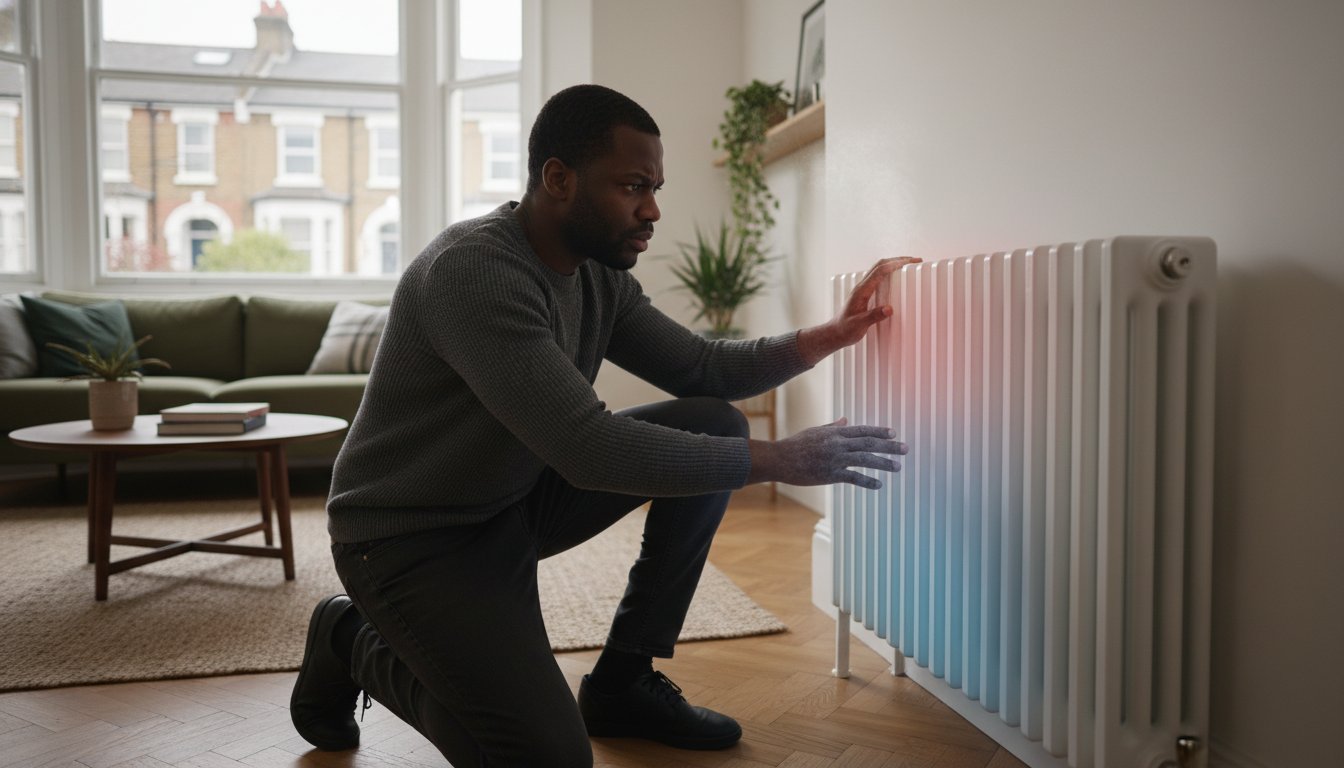
That cold patch at the base of your radiator isn’t just a minor annoyance; it’s a warning sign that your heating system is slowly choking on “heating sludge.” If you’ve noticed your radiator cold at bottom but hot at top, you’re likely paying for heat that never actually reaches your living space. With 89 percent of UK homes relying on wet central heating systems, and over 60 percent of households situated in hard water areas, this buildup of rust and limescale is a common symptom that often goes ignored until the boiler starts struggling.
We understand the anxiety that comes with uneven room temperatures and the fear of a massive repair bill. It’s frustrating to feel like you’re throwing money away on energy bills while still needing extra layers indoors. This 2026 guide promises to walk you through the precise causes of these cold spots and how to restore your system’s efficiency using both DIY tips and professional solutions. We’ll cover everything from simple valve adjustments to the necessity of regular maintenance, helping you decide exactly when it’s time to call in a Gas Safe engineer to protect your home and your wallet.
Key Takeaways
- Learn to diagnose whether your heating issues are caused by trapped air or internal sludge based on the specific location of cold spots.
- Understand why a radiator cold at bottom but hot at top is a classic sign of magnetite buildup that can lead to costly boiler repairs.
- Discover simple DIY fixes, including how to bleed your system and check for sticking thermostatic radiator valves, to restore immediate warmth.
- Identify how the hard water conditions in London and Essex contribute to system corrosion and why magnetic filters are a vital line of defense.
- Find out how professional Power Flushing and regular boiler servicing can clear deep-seated blockages and significantly lower your monthly energy bills.
Why Your Radiator is Cold at the Bottom but Hot at the Top
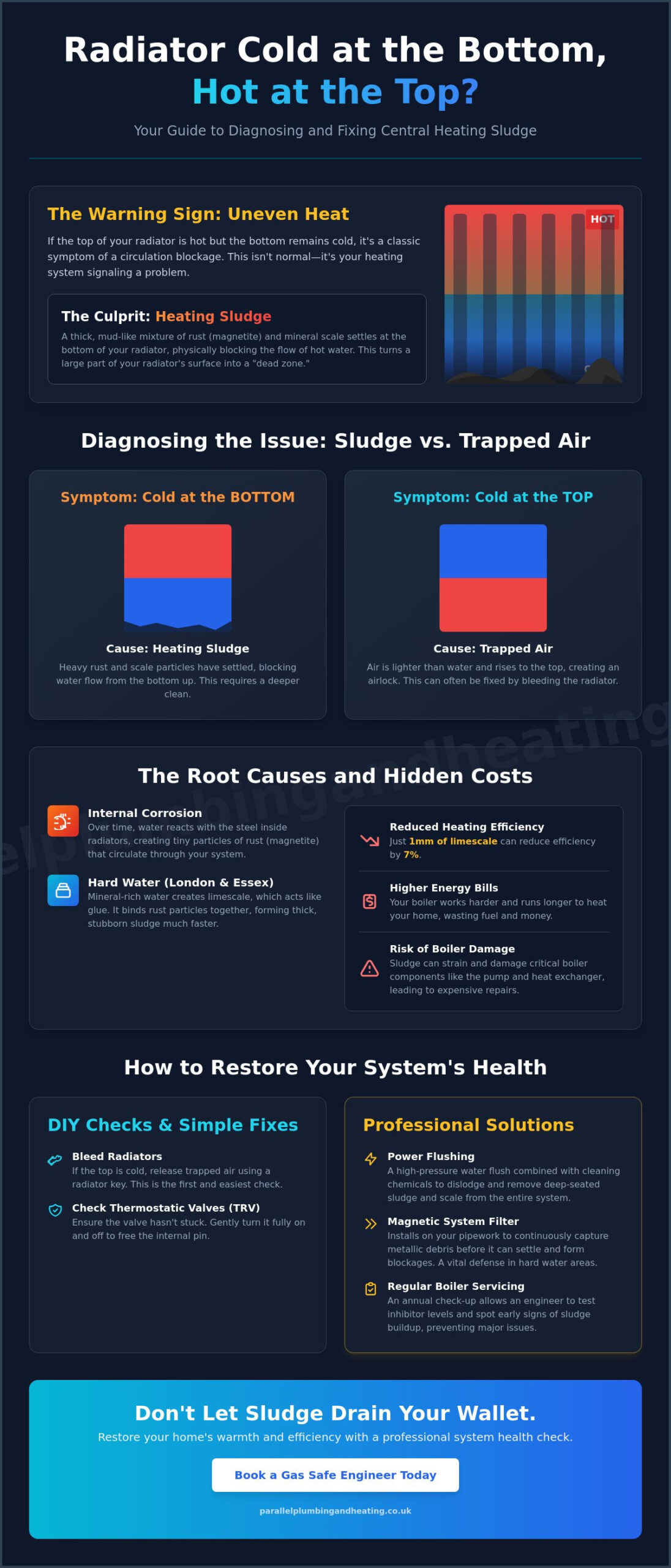
Finding your radiator cold at bottom but hot at top is a clear sign that your heating system is struggling. While it might be tempting to think that heat naturally stays at the top, radiators are engineered to provide uniform warmth from edge to edge. When the base remains stone-cold while the top is scalding, it indicates a circulation failure. The hot water enters the unit through the valves but is physically blocked from reaching the lower sections. Heating sludge is a mixture of rust and minerals that settles at the bottom of the system.
In a healthy central heating system, water should flow freely through every internal channel. When this flow is interrupted, your boiler has to work much harder to reach the temperature set on your thermostat. This inefficiency doesn’t just leave you with a chilly room; it actively drives up your energy bills. This isn’t a minor quirk. It’s a symptom of a system that needs professional attention to prevent long-term damage.
The Role of Central Heating Sludge
The primary culprit behind these cold spots is black iron oxide, commonly known as magnetite. This substance forms as a result of internal corrosion. Over many years, the water inside your radiators reacts with the steel, creating tiny particles of rust. These particles are heavy and metallic. Gravity eventually forces this debris to settle at the lowest point of the radiator. As it accumulates, it forms a thick, mud-like barrier. This sludge prevents hot water from circulating through the bottom fins, effectively turning off a large portion of your radiator’s heating surface.
Why One Radiator Might Be Affected More Than Others
It is common to find that only one or two radiators in your home exhibit this problem. Several factors influence where sludge decides to settle. Downstairs radiators often suffer first. Because they sit at the lowest level of the pipework, they act as natural collection points for debris traveling through the system. Radiators located at the “end of the line” in older pipework configurations often receive less pressure; this allows heavier particles to drop out of the water flow and settle more easily. Larger units also have more internal volume and lower flow velocities in certain sections. This makes them prime targets for magnetite accumulation. Understanding these patterns helps us identify whether you’re dealing with a localized blockage or a system-wide contamination issue.
The Science of Sludge: How Hard Water Affects London and Essex Homes
Living in the South East means dealing with some of the hardest water in the country. This isn’t just a problem for your kettle or showerhead; it’s a primary reason why you might find your radiator cold at bottom but hot at top. In London and Essex, the water is rich in calcium and magnesium. While these minerals are harmless to drink, they are incredibly destructive inside a closed heating loop. They create limescale, which acts as a bonding agent for the metallic debris already circulating in your pipes.
The technical Impacts of Water Quality on domestic systems are well-documented. When hard water is heated, it precipitates minerals that coat the internal surfaces of your radiators and boiler components. This scale doesn’t just sit there. It creates a rough surface that traps magnetite particles, leading to the thick, stubborn blockages we call sludge. This combination puts immense strain on your boiler pump and heat exchanger, forcing the entire system to work harder to move water through narrowed channels.
Limescale and Corrosion in the South East
Homeowners in Romford and across Essex often see faster sludge build-up than those in soft-water regions. The chemical reaction between hard water minerals and metal radiator internals creates a “double whammy” of scale and rust. System inhibitors are chemicals designed to slow this process by coating the metal surfaces, but they can’t stop it entirely if the water is exceptionally hard. Over time, the concentration of these minerals becomes too high for standard inhibitors to manage. This is why regular system health checks are vital for local properties.
The Hidden Cost to Your Energy Bills
The financial impact of a neglected system is significant. Industry data suggests that a mere 1mm layer of limescale can reduce your heating efficiency by 7 percent. If your radiators have cold spots at the base, your boiler is burning more gas to achieve the same room temperature. Many people try “turning it up” at the thermostat, but this is a myth. Higher settings cannot bypass a physical blockage of sludge and scale. It only leads to higher energy bills and a shorter lifespan for your boiler. Restoring efficiency requires a thorough cleaning to remove these deposits. If you’re concerned about your system’s performance, a professional Power Flushing service can clear these stubborn blockages and protect your components for the long term.
Diagnosing the Issue: Is it Trapped Air or System Sludge?
Before you attempt any repairs, you need to identify exactly where the heat is failing. Not all cold spots indicate the same problem. While finding your radiator cold at bottom but hot at top is a specific symptom of sludge, other patterns suggest different mechanical failures. Accurate diagnosis saves you time and prevents unnecessary call-out charges. Perform a “Touch Test” by carefully running your hand across the surface of the radiator while the heating is active. Be cautious; the hot areas can be scalding. Look for these three distinct patterns to understand what is happening inside your pipework.
A radiator that is cold at the top but hot at the bottom usually contains trapped air. Air is lighter than water, so it rises to the highest point and prevents hot water from filling the top section. If the radiator is cold in the middle but warm around the edges, you likely have a more stubborn, localized blockage. However, if the base is cold while the top is hot, you are dealing with the heavy magnetite debris discussed in the previous sections. This debris settles at the bottom, creating a physical barrier that water cannot penetrate.
The Cold Spot Comparison Guide
Use this table to quickly identify your next steps based on the symptoms you observe.
| Symptom | Likely Cause | Recommended Action |
|---|---|---|
| Cold at Top, Hot at Bottom | Trapped Air | Bleed the radiator |
| Radiator cold at bottom but hot at top | Magnetite Sludge | Professional Power Flush |
| Cold in Middle, Hot Edges | Restricted Flow | System Balancing or Cleaning |
| Entire Radiator Cold | Stuck Valve or Air Lock | Check TRV or call an engineer |
Watch for warning signs that the issue is spreading. If multiple radiators downstairs are cold at the base, or if your boiler has started making “kettling” noises, the sludge is likely circulating through your entire system. This increases the risk of a total breakdown.
When to DIY and When to Call a Professional
Knowing your limits is essential for home safety. Bleeding a radiator is a straightforward DIY task. It requires a radiator key and a cloth to catch small drips. Most homeowners can handle this in minutes. Chemical flushing is a mid-level task. It involves adding cleaning agents to the system, but it rarely clears heavy, solidified sludge at the bottom of a unit.
Heavy accumulation requires a professional Power Flushing service. This process uses high-pressure pumps and specialized chemicals to force debris out of the system. It is a strictly professional service because it requires monitoring system pressure to avoid leaks. If DIY bleeding doesn’t solve the problem, don’t keep “turning it up.” Call a Gas Safe engineer to perform a proper health check and restore your home’s warmth safely.
How to Fix Cold Radiators: Restoration and Power Flushing
Fixing a radiator cold at bottom but hot at top requires a systematic approach. Don’t jump straight to expensive repairs without checking the basics first. Start by bleeding the radiator with a standard radiator key. This releases any air that might be trapped, ensuring that water can fill the top section. If water spurts out immediately, air isn’t the problem. Next, inspect the thermostatic radiator valve (TRV). Remove the plastic head and check the small metal pin underneath. If it’s stuck down, gently pull it up with pliers to restore the flow of water. These simple steps rule out minor mechanical issues before you look at deeper blockages.
If these DIY steps fail, you need a professional diagnosis. Modern engineers use thermal imaging cameras to see inside your system without dismantling it. These cameras show clear dark patches where sludge has settled, confirming the exact location of the blockage. Water testing is another valuable tool. By analyzing the chemical makeup of your system water, we can determine the level of corrosion and the concentration of magnetite. This data-driven approach ensures we don’t recommend heavy restoration services unless they’re truly necessary.
The most effective solution for heavy sludge is a professional power flush. This process involves connecting a high-velocity, low-pressure pump to your central heating loop. It flushes every radiator individually, forcing out years of accumulated debris. We use specialized chemicals to break down stubborn blockages that standard water pressure cannot shift. It is considered the “gold standard” for system restoration because it cleans the pipework and the boiler heat exchanger simultaneously.
Restoring Flow with a Power Flush
A power flush works by moving a large volume of water through the system at high speed. Unlike high pressure, which could damage older joints, high velocity is designed to lift and transport heavy magnetite particles. Specialized chemicals are added to the water to loosen the “baked-on” sludge at the bottom of the radiators. This restores the full heating surface area of the unit, allowing it to radiate heat evenly from top to bottom once again. This process typically takes several hours but can extend the life of your boiler by several years.
Alternative Cleaning Methods
You might encounter alternative cleaning methods, but they often come with significant risks. Chemical sludge removers can work for very minor build-ups, but they rarely shift solidified magnetite at the base of a unit. Manual radiator flushing involves taking the radiator off the wall and hosing it down outside. This is a high-risk task that often leads to leaks and stained carpets. Professional equipment is far safer. It contains all the mess within a closed loop, protecting your home while delivering a deeper clean. If your home isn’t reaching the temperature you’ve set, you can book a professional Power Flushing service to clear your system and protect your boiler’s lifespan.
Preventing Radiator Cold Spots and Protecting Your Boiler
Stopping sludge before it starts is the only way to ensure your heating system remains reliable. If you have already corrected a radiator cold at bottom but hot at top, your next goal is to keep the pipework clear. Prevention is far more cost-effective than reactive repairs. It protects your boiler’s internal components and keeps your energy bills predictable. Most 10-year boiler warranties require a clean system to remain valid, and evidence of sludge buildup can often void these critical protections. Maintaining a healthy system is a legal and financial necessity for modern homeowners.
Chemical inhibitors play a vital role in this defense strategy. These fluids are added to the system water to create a protective film over the metal surfaces. This film prevents the chemical reaction between water and steel that leads to corrosion. During an annual boiler service, we always check inhibitor levels to ensure the concentration is still effective. Without this protection, the hard water found in our region will quickly begin to degrade your radiators from the inside out.
The Power of Magnetic Filters
Magnetic filters are one of the most effective tools for maintaining water clarity. These devices are installed on the return pipework to “mine” metallic debris out of the water flow before it can enter the boiler. They use a high-strength magnet to capture magnetite particles that would otherwise settle at the base of your radiators. We recommend these filters for every new boiler installation in Essex. Cleaning the filter is a quick, mess-free task that our engineers perform during your yearly maintenance visit, ensuring your system stays sludge-free year-round.
Long-Term Maintenance Strategy
A proactive approach to maintenance involves more than just waiting for a breakdown. Monitor your system pressure regularly; frequent drops can indicate a leak that introduces fresh, oxygenated water, which accelerates corrosion. Smart thermostats and zoned heating controls can also help by detecting when a room is taking too long to heat up, often flagging a radiator cold at bottom but hot at top before you even notice the temperature drop. Restoring your heat is often faster and cheaper than you think. Contact Parallel Plumbing today for a comprehensive system health check to ensure your home stays warm and your boiler remains under warranty.
Restore Your Home’s Warmth and Efficiency
Identifying why your heating is failing is the first step toward a more comfortable home. You now know that a radiator cold at bottom but hot at top isn’t just a minor glitch. It’s a symptom of system-wide sludge that forces your boiler to work harder while delivering less heat. By diagnosing these issues early and choosing professional restoration, you protect your boiler’s lifespan and ensure your energy bills remain manageable throughout the year. Ignoring these cold spots only leads to higher costs and potential warranty issues later.
Our Gas Safe Registered Engineers are specialists in London and Essex hard water systems. We understand the unique challenges of South East pipework and offer an up to 3-year workmanship guarantee for your peace of mind. Taking action now prevents the stress of emergency repairs during the peak of winter. Book a Power Flush or System Health Check Today to clear your radiators and restore maximum efficiency to your property. You can regain control of your home’s comfort with one simple professional visit. Let’s get your heating system back to its best.
Frequently Asked Questions
Is it dangerous if my radiator is cold at the bottom?
It isn’t an immediate safety hazard to your family, but it’s dangerous for your boiler’s health. The accumulation of sludge forces the pump to work under extreme pressure, which can cause the unit to overheat. This often results in “kettling” noises or total system shutdowns. Addressing the issue early prevents a minor blockage from turning into a costly emergency repair and ensures your home remains safe and warm.
How much does it cost to fix a radiator with a cold bottom?
The cost depends entirely on the severity of the blockage and the required solution. Simple fixes like bleeding or releasing a stuck valve cost nothing if you do them yourself. However, if you have a radiator cold at bottom but hot at top due to deep-seated sludge, a professional cleaning service is necessary. Professional rates vary based on the size of your property and the number of radiators needing attention.
Can I fix a cold radiator bottom myself without a plumber?
You can handle basic maintenance tasks like bleeding the air or checking the valve pins. These steps often resolve temperature issues at the top of the unit. If the problem is heavy magnetite sludge at the base, DIY methods usually fall short. Specialized pumps and chemicals are needed to physically remove the debris without damaging your pipework or causing leaks in your home. Professional equipment is essential for deep cleaning.
Will bleeding my radiator fix a cold spot at the bottom?
No, bleeding your radiator won’t fix a cold spot at the bottom. Bleeding is designed to release trapped air, which always gathers at the highest point of the system. If your radiator is cold at the top, bleeding is the correct fix. When the base is cold, it’s a physical blockage of heavy sludge that requires a thorough system flush to clear. Trapped air and sludge are two different mechanical problems.
Does a cold radiator mean I need a new boiler?
A cold radiator rarely means you need a brand-new boiler installation. In most cases, the boiler is functioning correctly, but the heat cannot reach the room due to a blockage in the radiator or pipework. Restoring your system’s efficiency through professional cleaning or a power flush is usually enough to bring back the warmth. We only recommend a replacement if the boiler itself has suffered irreversible internal damage from prolonged sludge exposure.
How often should I have my heating system power flushed?
Most heating systems benefit from a power flush every five to six years to maintain peak efficiency. You should also have one performed whenever you install a new boiler to protect the new unit’s warranty. Regular annual servicing helps monitor the health of your water. If your engineer notices significant water discoloration or rising energy bills, they may suggest a flush sooner to prevent blockages from damaging your central heating pump.
Can sludge in my radiators cause my boiler to make banging noises?
Yes, sludge is a primary cause of boiler “kettling” or banging noises. When magnetite debris travels from your radiators into the boiler’s heat exchanger, it restricts water flow and causes localized boiling. This creates the loud knocking or whistling sounds you hear. Clearing the sludge from your radiators prevents these particles from reaching the boiler and causing a permanent mechanical failure. It is a vital step for maintaining a quiet, efficient home.
What happens if I ignore the sludge in my radiators?
Ignoring sludge leads to a steady decline in heating performance and a sharp increase in your monthly gas bills. Over time, the internal corrosion will eat through the metal, causing pinhole leaks in your radiators. The extra strain on the pump and heat exchanger will eventually lead to a total system breakdown. Proactive maintenance is always cheaper than replacing major components or dealing with a radiator cold at bottom but hot at top.