
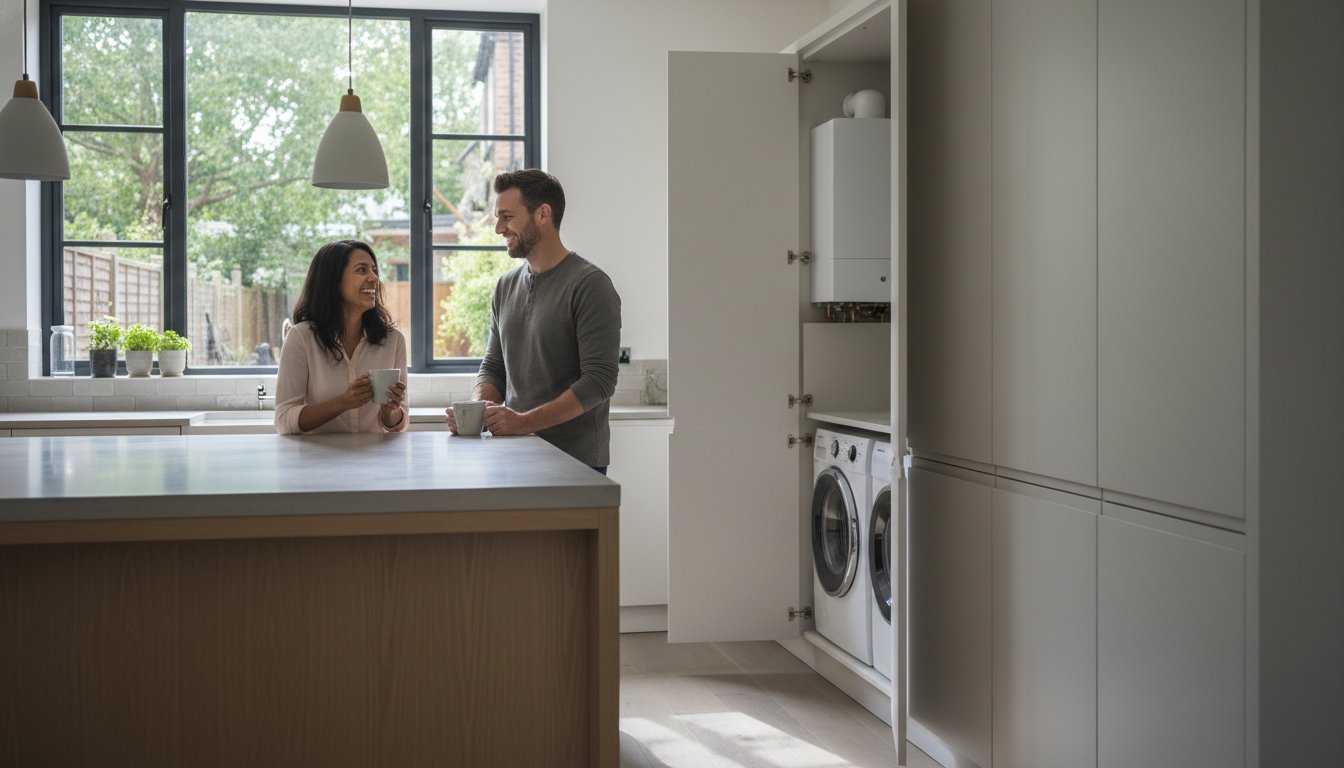
Why do so many London homeowners settle for a heating system that can’t handle two showers running at the same time? It’s a common frustration, but it often comes down to simply having the wrong setup for the property. We know that choosing between different types of boiler feels like learning a second language, especially when you’re worried about low water pressure in a Victorian conversion or finding space for a bulky cylinder in a compact Essex terrace. You want a warm home without the headache of industry jargon or hidden costs.
This 2026 guide removes the confusion by matching the right technology to your property size and water usage habits. You’ll learn exactly how to secure constant hot water and lower your energy bills through smarter, more efficient choices. We’ll break down the three main options, including combi, system, and regular units, so you can move forward with the confidence of a Gas Safe registered expert. Whether you’re in a high-rise flat or a five-bedroom house, we’ve got the technical breakdown you need to make an informed decision for your home.
Key Takeaways
- Identify whether a Combi, System, or Regular unit best suits your property size and hot water requirements.
- Compare the three main types of boiler to find the most efficient match for your family’s daily water usage.
- Understand how the hard water factor in Essex affects internal components and which systems offer the best durability.
- Learn the benefits of switching to a modern condensing standard for improved efficiency and lower energy bills.
- Discover why hiring a local Gas Safe registered engineer is essential for a safe and professional boiler installation in London and Essex.
Understanding the Three Main Types of Boiler
Choosing a new heating system is a significant investment for any homeowner. In 2026, UK energy regulations are more stringent, focusing heavily on carbon reduction and efficiency. Understanding the different what is a boiler options is the first step toward a warmer, more cost-effective home. There are three primary types of boiler: Combi, System, and Regular (Heat-Only). Each serves a specific purpose based on your property size and water usage habits.
Fuel choice also plays a major role in your decision. While natural gas is the standard for most London streets, LPG is a reliable alternative for rural Essex properties. Electric boilers are increasingly common in modern city developments where gas infrastructure isn’t available. Our Gas Safe registered team helps you match the right unit to your existing setup to ensure long-term reliability and safety. We focus on direct, practical solutions that work for your specific postcode.
What is a Condensing Boiler?
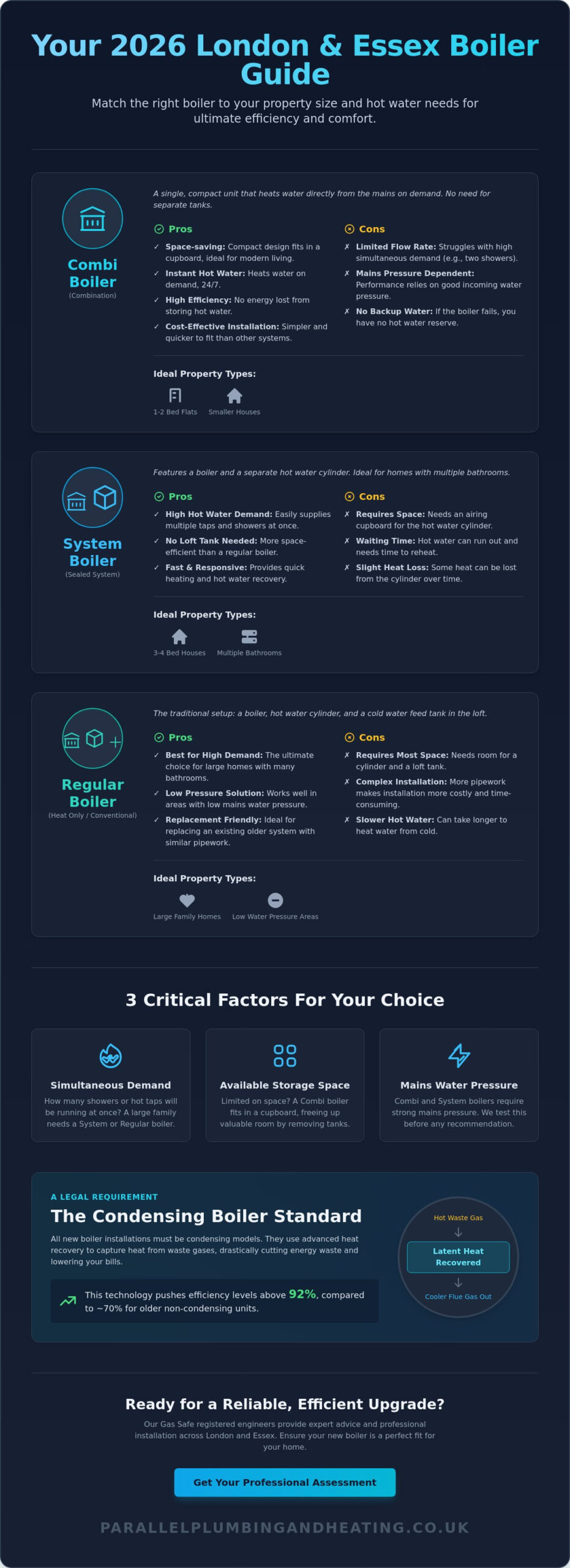
Every new boiler installation in the UK must now be a condensing model. This isn’t just a recommendation; it’s a legal requirement designed to cut energy waste. These units use advanced heat recovery technology to capture latent heat from waste exhaust gases. This process pushes efficiency levels above 92%, compared to older non-condensing units that often struggled to reach 70%. When we install these in London and Essex homes, we include a flue for ventilation and a condensate pipe to manage the liquid runoff. It’s a proven way to lower your carbon footprint and reduce annual heating costs immediately.
Key Factors Influencing Your Choice
Selecting from the various types of boiler requires a clear look at your household’s daily needs. A one-bedroom flat in Shoreditch has very different requirements than a five-bedroom detached house in Chelmsford. You must consider these three critical areas:
- Simultaneous Demand: If you have three bathrooms and a large family, you’ll need a system that can provide hot water to multiple taps at once without a drop in pressure.
- Storage Space: Combi boilers are excellent for saving space because they don’t require external tanks. If your home is short on storage, a Combi is usually the best fit.
- Mains Water Pressure: Modern Combi and System boilers depend on the strength of the water coming from the street. Our engineers always test your local pressure before recommending a specific model.
We provide a direct, honest assessment of your home’s infrastructure. This ensures you don’t end up with a system that can’t cope with your peak demand. Our goal is to provide peace of mind through expert installation and transparent advice, ensuring your 2026 upgrade is future-proof.
The Combination (Combi) Boiler: Efficiency for Modern Living
Combi boilers are the most common of all types of boiler found in South East London apartments today. They function as a single, compact unit that manages both your central heating and hot water. There is no need for a bulky cold water tank in the loft or a separate hot water cylinder in an airing cupboard. This “on-demand” system triggers the gas burner the moment you turn on a tap. Cold water from the mains passes over a highly efficient heat exchanger, warming it instantly for your shower or kitchen sink.
Understanding how boilers work highlights the efficiency of this specific design, as it eliminates the energy waste associated with storing hot water for long periods. Residents in high-density areas like Wapping and Bermondsey often live in converted warehouses or modern riverside blocks where every square foot of floor space is at a premium. A wall-mounted Combi fits neatly inside a standard 600mm kitchen cupboard, freeing up valuable storage space that older, traditional systems would otherwise occupy.
Pros and Cons of Combi Systems
A Combi boiler is an all-in-one unit that heats water directly from the mains. This setup offers several advantages for the fast-paced London lifestyle, though it does have specific limitations for larger families.
- Benefit: You get instant hot water 24 hours a day without waiting for a tank to refill. This saves significant space in kitchen cupboards or utility rooms by removing the need for external cylinders.
- Drawback: These units struggle with high simultaneous demand. You will likely experience reduced flow rates if two showers are running at once, as the boiler must split the incoming mains water pressure between both outlets.
Ideal Property Types for Combi Boilers
This system is the logical choice for 1-2 bedroom flats and smaller Victorian terraces in Peckham. Since these older properties often lack the structural loft space for heavy water tanks, the Combi provides a modern solution that simplifies the plumbing layout. It’s also the primary choice for homeowners who want to reclaim their old airing cupboard to create a modern walk-in wardrobe or a small ensuite bathroom.
If you’re planning an upgrade for a smaller home, our team provides expert Boiler Installation in London & Essex: The 2026 Guide to help you transition to these efficient units. While Combi boilers are incredibly reliable, they aren’t usually suited for large five-bedroom houses in Essex with three or more bathrooms. In those scenarios, the mains pressure often cannot keep up with multiple occupants using hot water simultaneously. For the majority of urban professionals and small families, the simplicity and energy savings are the best fit. If you need a quick assessment of your current system, our Gas Safe registered engineers can visit your property to provide a transparent recommendation.
System and Regular Boilers: Solving High Hot Water Demand
Combi boilers are efficient, but they can’t always keep up with the heavy usage of a busy Essex household. If your home in Romford has more than two bathrooms, you’ll likely need a system that stores hot water in advance. These types of boiler use a separate cylinder to provide a constant, high-pressure supply to multiple taps simultaneously. This prevents the dreaded cold shower when someone turns on the kitchen tap while you’re upstairs.
Choosing between a system or regular setup depends on your current plumbing and your plans for the future. Our Gas Safe registered engineers often recommend stored-water solutions for larger properties to ensure consistent comfort. We focus on providing a reliable, transparent service that matches the right technology to your specific floor plan. It’s about finding the most efficient way to keep your family warm without wasting energy.
The System Boiler Explained
A system boiler is a modern middle ground. It houses the pump and expansion vessel inside the boiler unit itself; this makes the installation cleaner and more compact than older setups. It’s the standard choice for 3+ bedroom homes in Deptford where space is at a premium but hot water demand is high. These units work perfectly with unvented cylinders, which take water directly from the mains to deliver powerful pressure. As we move toward 2026, system boilers are also becoming hybrid ready. They can integrate with solar thermal panels or heat pumps, making them a future-proof investment for your property. To see how these systems are implemented in energy-efficient designs, you can explore Electric Heat Pumps through specialists like Melbourne Hydronic Heating.
Regular Boilers: When to Keep the Tradition
Regular boilers, also known as conventional or heat only boilers, are the traditional setup found in many older Camberwell terraces. They require two tanks in the loft: a large cold water storage tank and a smaller Feed and Expansion tank. You should consider staying with this setup if your home has an older radiator circuit. High-pressure modern systems can sometimes cause leaks in aged pipework. Keeping a low-pressure, gravity-fed regular boiler avoids this risk. While they require more loft space, they remain a dependable option for large families who don’t want the upheaval of a full repipe. Choosing between these types of boiler often comes down to the integrity of your existing copper pipes.
- System Boilers: Best for modern homes, no loft tanks needed, delivers high-pressure water.
- Regular Boilers: Ideal for older radiators, requires loft space, uses gravity for pressure.
- 2026 Readiness: Both options can be adapted for greener energy transitions and solar integration.
- Technical Note: Unvented cylinders provide better pressure but require a G3 qualified engineer for installation.
Our team at Parallel Plumbing and Heating Ltd prioritises safety and high standards of workmanship. We don’t believe in hidden costs or high-pressure sales. Whether you’re in a Victorian house in Camberwell or a modern build in Romford, we provide the calm expertise needed to keep your hot water flowing. We’re available 24/7 to ensure your home remains a comfortable environment, no matter how high the demand.
Choosing the Right Boiler for Your London or Essex Property
Selecting from the various types of boiler available in 2026 requires a balance between your daily hot water demands and the physical constraints of your property. Your location in the South East dictates more than just the delivery address; it determines the water pressure you receive and the mineral content flowing through your pipes. Our Gas Safe registered engineers focus on matching the specific infrastructure of your neighborhood to the right heating technology.
Property Archetypes and Recommended Boilers
In Victorian terraces across East Dulwich, we frequently perform Combi conversions to reclaim valuable square footage. These properties often have old, 15mm copper pipework that wasn’t designed for high-pressure systems. We always conduct a flow rate test before installation to ensure a Combi can deliver enough hot water to your upstairs bathroom without a drop in performance.
For detached suburban homes in Essex, a System boiler paired with a large unvented cylinder is often the superior choice. These properties typically house larger families with multiple bathrooms. A System boiler allows you to run two or three showers simultaneously, which a standard Combi cannot manage. To find the perfect fit for your home size, read our guide on What Size Boiler Do I Need?
Modern apartments in Greenwich present a different challenge. Space is at a premium, and many blocks don’t have gas connections. In these instances, we install compact Combi solutions or high-efficiency electric boilers. These units fit inside standard kitchen cupboards and provide quiet operation for open-plan living environments.
Local Environmental Considerations
Hard water is a significant issue for homeowners in Romford and across Essex. High mineral content leads to rapid limescale buildup, which can reduce boiler efficiency by 12% in just a few years. We recommend installing magnetic filters and electrolytic scale reducers as standard. Local water hardness in Essex necessitates high-quality internal heat exchangers to prevent premature component failure and maintain your manufacturer’s warranty.
London water pressure remains a challenge for those living in high-rise or top-floor flats. If your mains pressure is below 1.0 bar, a standard Combi boiler will struggle. In these cases, we often install a cold water break tank and a booster pump to ensure your shower remains powerful. We also prioritize “Whisper-Quiet” certified models for London flats where the boiler is often located near sleeping or social areas.
Professional Installation and Making the Switch
Selecting the right hardware is only the first step. The quality of your installation determines the lifespan and efficiency of your heating system. You must use a Gas Safe registered engineer for any gas work in South East London. This isn’t just a recommendation; it’s a legal requirement to ensure your home remains safe and your insurance stays valid. We provide a 3-year workmanship guarantee for all Essex and London homeowners, demonstrating our confidence in every joint we seal and every flue we fit.
Switching between different types of boiler requires careful planning. If you’re converting from a traditional heat-only setup to a modern Combi system, we’ll remove old tanks from your loft and cylinders from your airing cupboard. This creates valuable storage space but requires significant pipework reconfiguration. A professional survey is essential before you purchase any unit. We assess your mains water pressure and flow rates to ensure your chosen system can actually deliver the performance you expect.
The Installation Process in 2026
During the initial assessment, we check your gas pipe sizing. Many older properties in London have 15mm copper piping that can’t supply enough fuel for high-performance modern units. We often upgrade these to 22mm to ensure peak efficiency and compliance with current standards. We also verify flue exit points to meet 2026 safety distances from windows and doors.
Power flushing is a non-negotiable part of our process. We clean your old radiators to remove magnetite and sludge before the new unit is commissioned. This prevents debris from clogging your new heat exchanger and protects your manufacturer’s warranty. If you’ve had issues with cold spots or noisy pipes in the past, you might find our guide on Expert Boiler Repair in Essex helpful for understanding how we restore system health.
Next Steps with Parallel Plumbing and Heating Ltd
We provide fixed-price quotes for homeowners in Romford, Bermondsey, and Southwark. You won’t face hidden costs or unexpected extras once we’re on-site. Our local expertise means we understand the specific plumbing layouts common in South East London terraces and Essex suburban homes. We’re a safe pair of hands, focused on transparency and technical excellence. We’ll help you navigate the different types of boiler to find the perfect fit for your lifestyle and budget.
Don’t leave your home comfort to chance. Our team is ready to provide a detailed assessment of your heating needs. Book your local boiler survey today and secure a reliable, efficient heating system for your property.
Future-Proof Your London or Essex Home Today
Choosing the right heating system ensures long term comfort and lower energy bills. Whether you need a space saving combi for a London flat or a high capacity system boiler for a large Essex house, understanding the different types of boiler is the first step toward a warmer home. Since 2018, Parallel Plumbing and Heating Ltd has helped local homeowners navigate these choices with transparent advice and technical expertise. We focus on getting the job done right the first time so you don’t have to worry about unexpected breakdowns.
Our Gas Safe registered engineers handle every installation with precision and care. We provide an up to 3 year workmanship guarantee because we’re confident in our high standards. You won’t find hidden costs or high pressure sales tactics here; just honest, reliable work from local experts who live and work in your community. We’ve built our reputation on being a safe pair of hands for every client across SE London and the South East.
Ready to upgrade your heating system? Get a Fixed-Price Boiler Installation Quote in London & Essex. Your home’s efficiency starts with a professional installation you can trust.
Frequently Asked Questions
Which type of boiler is most energy-efficient for a 3-bedroom house in Essex?
A high-efficiency A-rated combi boiler is typically the best choice for a standard 3-bedroom house in Essex. These types of boiler achieve energy efficiency levels of 92% or higher according to SEDBUK 2009 standards. You’ll save space because you don’t need bulky tanks. Our Gas Safe registered engineers often recommend 30kW models for these properties to ensure consistent heating and hot water during cold South East winters.
Can I swap a regular boiler for a combi boiler in my London flat?
You can certainly swap a regular boiler for a combi model in your London flat. This conversion is a popular choice for homeowners looking to reclaim valuable storage space by removing old water tanks. Our team handles the necessary pipework adjustments and ensures the system meets current building regulations. It’s a direct way to modernize your heating while enjoying hot water on demand without waiting for a cylinder to heat up.
What is the best boiler type for homes with low mains water pressure?
A regular boiler or a system boiler combined with an unvented cylinder is the best option if your home has low mains water pressure. Combi boilers rely entirely on the incoming mains pressure to push water through your taps. If your pressure is below 1.0 bar, a combi will struggle. A stored water system ensures a steady flow rate across multiple bathrooms, which is essential for larger Victorian properties in London.
Do I need a hot water cylinder if I install a system boiler?
You definitely need a separate hot water cylinder if you choose a system boiler. While these types of boiler house most components like the pump and expansion vessel internally, they don’t heat water on demand like a combi. Instead, they heat water and store it in a cylinder for later use. This setup is ideal for larger families who need to run multiple taps simultaneously without a drop in temperature or pressure.
How long does it take to install a different type of boiler?
A complex installation where you change the boiler type usually takes between 2 and 3 days to complete. A simple like-for-like replacement often finishes within 24 hours, but moving from a regular system to a combi requires significant pipework alterations. Our local experts work efficiently to minimize disruption, ensuring your new system is fully commissioned and Gas Safe certified before we leave. We prioritize a tidy, professional finish every time.
Is a combi boiler powerful enough to run two showers at the same time?
Most standard combi boilers struggle to run two powerful showers simultaneously without a noticeable drop in pressure. To achieve this, you’ll need a high-output model with a flow rate of at least 15 liters per minute. Even then, performance depends on your home’s mains water pressure. For larger households with high hot water demands, we often recommend a system boiler with an unvented cylinder to ensure everyone gets a hot shower.
What happens to my old water tanks if I switch to a combi system?
We decommission and remove your old cold water storage tank and the hot water cylinder when you switch to a combi system. This process creates extra space in your loft and airing cupboard, which is a major benefit for compact London homes. Our engineers ensure all redundant pipework is safely capped off or removed. We take care of the heavy lifting and disposal, leaving your home clean and your new system ready to use.
Are electric boilers a viable alternative to gas boilers in South East London?
Electric boilers are a viable alternative for smaller South East London flats, particularly where gas supply is restricted or for environmental reasons. They offer 100% efficiency at the point of use and don’t require a flue, which simplifies installation. However, electricity costs per unit are currently about 3 to 4 times higher than gas according to Energy Saving Trust data. They’re best suited for well-insulated properties with lower overall heating requirements.