
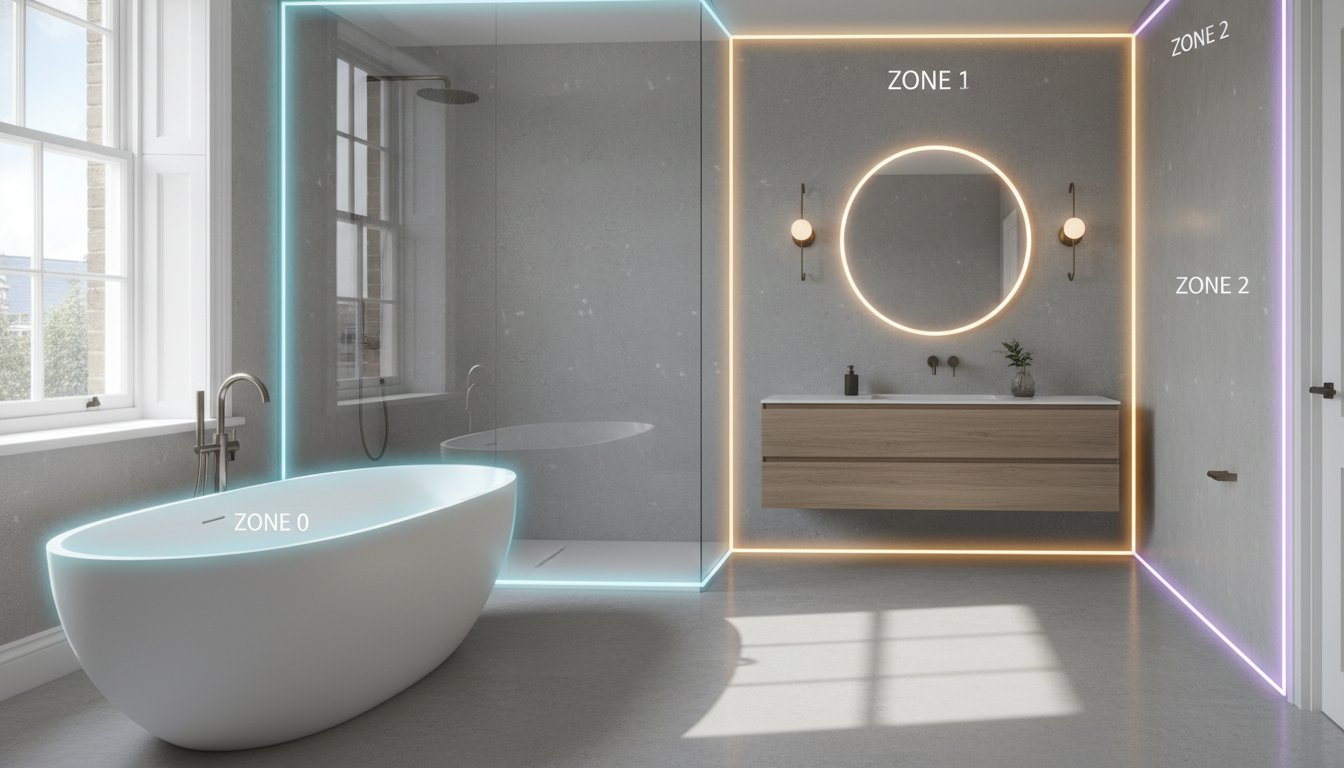
Last Tuesday, a homeowner named Sarah in Romford discovered that her sleek new LED mirror didn’t just look out of place; it actually breached Part P of the Building Regulations because it sat 10cm too close to the bath. It’s a common story across London and Essex, where the excitement of a renovation hits the reality of strict safety standards. You probably already know that water and electricity are a lethal combination, yet the technical jargon surrounding bathroom electrical zones often feels like a barrier to your dream design.
We understand that you want a stylish finish without the constant worry of an electric shock or a failed building survey when you decide to sell. This 2026 guide cuts through the confusion to ensure your project is compliant, safe, and built to last. We’ll explain exactly where your lights and sockets can go, clarify those tricky IP ratings, and show you how to hire a local expert who won’t cut corners during your next home improvement project.
Key Takeaways
- Understand the latest BS 7671 safety standards to ensure your renovation meets strict UK electrical regulations.
- Master the layout of bathroom electrical zones to identify exactly where lights, fans, and sockets can be safely installed.
- Learn how to decode IP ratings so you can choose the correct waterproof fittings for specific areas of your bathroom.
- Avoid common installation mistakes, such as incorrect shaver socket placement or ignoring height requirements in tall London period properties.
- Discover why professional design and installation are vital for navigating the complex safety challenges of small South East London homes.
What are Bathroom Electrical Zones and Why Do They Matter?
Bathroom electrical zones are defined safety perimeters. They govern where you can safely install specific electrical equipment based on its proximity to water. In the UK, these zones are strictly regulated by BS 7671, also known as the 18th Edition of the IET Wiring Regulations, which saw significant updates in January 2019. Because water and electricity are a lethal combination, the government classifies bathrooms as “special locations” under Part P of the Building Regulations. This classification means that most electrical work in these rooms must be notified to local building control to ensure it meets rigorous safety standards.
Failing to respect these zones carries heavy legal and financial consequences. If you decide to sell your home, the buyer’s solicitor will demand a Building Regulations Compliance Certificate for any bathroom alterations. Without this proof of professional installation, the sale can stall or collapse entirely. You might also face enforcement action from local authorities. Fines for non-compliant installations can exceed £5,000, making it essential to get the job done right the first time by experts who understand the layout of bathroom electrical zones.
The Science of Water and Electricity
Humidity and steam turn your bathroom into a high-risk environment. Wet skin significantly reduces your body’s natural resistance to electric current, making shocks far more likely to be fatal. To mitigate this, modern UK circuits require Residual Current Device (RCD) protection. An RCD is designed to trip and cut the power within 40 milliseconds if it senses a current leakage. This rapid response saves lives. Standard “dry room” light switches or sockets are dangerous here because they lack the necessary IP ratings to prevent moisture ingress. These ratings define how well a fitting resists water. For instance, a Zone 1 fitting usually requires a minimum of IPX4 protection to handle direct splashes from a showerhead.
Who Can Legally Install Electrics in a Bathroom?
It isn’t just about technical skill; it’s about legality and insurance. You should always use an NICEIC-approved contractor or a Gas Safe registered engineer for any work involving bathroom electrics. DIY attempts in these zones are a major risk that often backfires. Most UK home insurance providers include specific clauses that void your cover if uncertified electrical work causes a fire or injury. If you can’t produce a certificate, you are on your own. Before committing to any contractor, using a structured approach to vet bathroom fitters london homeowners trust can help you avoid costly mistakes from the outset.
The 3 Main Bathroom Zones Explained: From Zone 0 to Outside Zones
Visualising your bathroom as a safety map is the best way to understand how electricity and water can coexist. We treat every bathroom installation like a grid. Each section has a specific risk level based on its proximity to water sources. These bathroom electrical zones dictate exactly what type of light fittings, fans, or heaters we can safely install in your home.
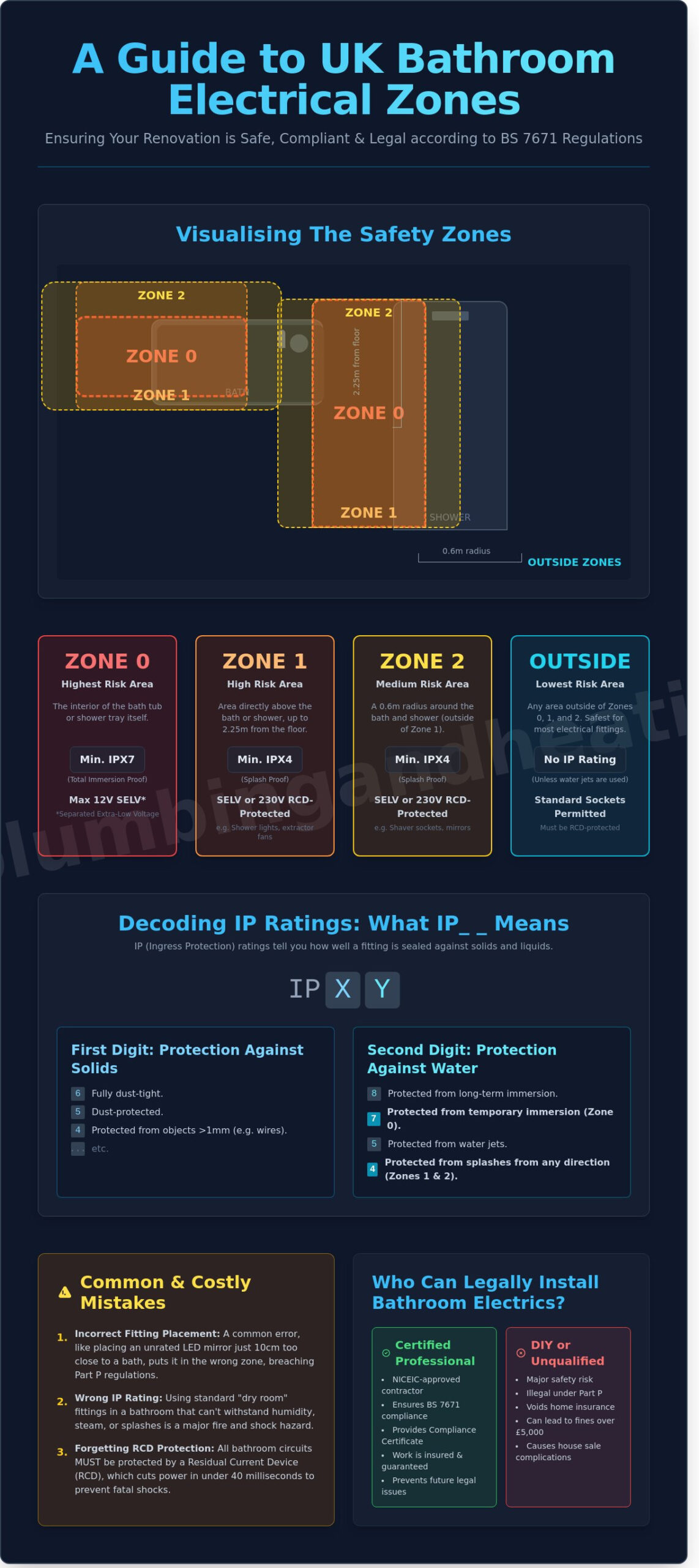
Zone 0 is the highest risk area. It includes the actual interior of the bath tub or the shower tray. Any electrical fitting used here must be low voltage, specifically a maximum of 12V. It also requires an Ingress Protection rating of at least IPX7. This rating ensures the component is protected against total immersion in water. You’ll typically only see specialist mood lighting or whirlpool jet controls in this space.
Zone 0 and Zone 1: High-Risk Areas
Zone 1 is the area directly above the bath or shower. This zone extends to a height of 2.25m from the finished floor level. If your shower head is fixed higher than 2.25m, Zone 1 extends to that height instead. For homeowners with wet rooms that lack a traditional tray, Zone 1 covers a horizontal radius of 1.2m from the fixed shower head.
Fittings in this area must have a minimum rating of IPX4 to protect against splashes. We frequently install IP45-rated extractor fans and shower lights here to provide an extra margin of safety. Following the bathroom electrical safety guidelines ensures these high-moisture spots meet the 18th Edition Wiring Regulations. Our engineers always check these heights during a site visit to ensure your equipment is positioned correctly.
Zone 2 and the Outside Zones
Zone 2 is the 0.6m “buffer” area that stretches beyond the edge of the bath or shower. It also encompasses the area 0.6m around any washbasin tap. This is the most common location for illuminated mirrors and shaving cabinets. While it’s slightly further from the main splash zones, steam and condensation are still factors. Equipment in Zone 2 must still carry an IP44 rating at a minimum to remain safe and functional over time.
Outside Zones refer to any part of the room that falls outside the 0.6m boundary. In large Essex family bathrooms, this might include the far corners where you keep storage units or towel rails. While these areas are “safer,” strict rules still apply. According to BS 7671, you can only install a standard 13A socket outlet if it’s at least 3 metres away from the boundary of Zone 1. Most UK bathrooms aren’t large enough to meet this 3m requirement, which is why you rarely see standard plugs in British washrooms. If you’re planning a renovation, our team can provide a professional safety assessment to ensure your layout is fully compliant.
Decoding IP Ratings: Choosing the Right Fittings for Your Zone
Every electrical fitting in your home has an Ingress Protection (IP) rating. This two-digit code tells you exactly how much punishment a light or socket can take before it fails. The first digit measures protection against solid objects like dust or fingers, ranging from 0 to 6. The second digit is the critical one for your bathroom. It measures protection against moisture, ranging from 0 to 8. For bathroom electrical zones, this second number determines whether a fitting is legal or a potential hazard.
Safety isn’t just a recommendation; it’s a legal requirement. All electrical installations in UK dwellings must comply with the standards detailed in Approved Document P. Following these guidelines ensures your home remains safe and your insurance stays valid. While meeting the minimum IP rating is mandatory, choosing a higher rating often pays off. Better seals prevent steam from corroding internal components, which extends the life of your expensive fixtures.
IP44 vs IP65: Which Do You Need?
Choosing between IP44 and IP65 depends on where the fitting sits. For Zone 2, which extends 0.6 metres outside the bath or shower, you need a minimum of IP44. This rating ensures the unit is splash-proof from all angles. It’s the standard choice for most wall lights and mirror heat pads.
Zone 1 requires more robust protection. Because this area is directly above the bath or shower up to a height of 2.25 metres, it faces direct water spray. You should opt for IP65 or higher here. IP65 units are “jet-proof,” meaning they can withstand water projected from a nozzle. If you’re installing a light inside the bath or shower tray itself (Zone 0), you must use IPX7. This rating ensures the fitting is fully submersible, protecting it if it’s underwater for up to 30 minutes.
Choosing Stylish Yet Compliant Lighting
You don’t have to settle for bulky, industrial-looking lights to stay safe. Modern manufacturers now produce sleek, minimalist designs that carry high IP ratings. You’ll find the IP rating clearly marked on the centre of the packaging or within the technical data sheet. Always verify this before you buy, as many “bathroom-style” lights sold online don’t actually meet the bathroom electrical zones requirements for Zones 1 or 2.
Safety Extra Low Voltage (SELV) lighting is becoming the standard for modern bathroom renovations. These systems use a transformer to drop the voltage down to 12V or 24V. This significantly reduces the risk of electric shock in wet environments. By combining SELV technology with the correct IP-rated housing, you create a lighting scheme that’s both beautiful and incredibly safe. Always ensure your transformer is tucked away safely outside the zones, usually in the ceiling void or a ventilated cupboard.
Common Electrical Mistakes in Bathroom Renovations
Renovating a bathroom involves more than just picking out stylish tiles and modern fixtures. Errors in planning often lead to failed building inspections or dangerous electrical faults. One frequent oversight occurs in London’s period properties, where ceiling heights often exceed 3 metres. While standard regulations state Zone 1 ends at 2.25 metres from the finished floor level, this zone extends upwards if the shower head is fixed higher than that point. Ignoring this height requirement means installing non-rated light fittings in what is technically a high-risk area.
Another common trap is the use of standard LED strips in recessed shelving or “niches.” These are popular in modern designs, but installers often use IP20-rated strips intended for kitchens. Within bathroom electrical zones, specifically near the bath or shower, these must be at least IP65 rated to prevent moisture ingress. Without this protection, the adhesive fails, and the circuitry corrodes within months, leading to flickering or total failure. Many projects involving bathroom installation in London fail within 24 months precisely because these electrical zone requirements are overlooked during the initial planning stage.
- Incorrect Light Pulls: Placing a standard cord switch directly over a bath is a violation of safety distances.
- Unprotected Circuits: Failing to ensure all bathroom circuits are RCD protected as per BS 7671 standards.
- Inadequate Earthing: Missing supplementary bonding in older homes where pipework isn’t properly grounded.
The Shaver Socket Misconception
Many homeowners assume any “bathroom-style” socket is safe anywhere. This isn’t true. A shaver supply unit must comply with BS EN 61558-2-5, which includes an isolating transformer. These units are safely installed in Zone 2. However, standard three-pin 13A sockets are strictly prohibited unless they are fitted at least 3 metres horizontally from the boundary of Zone 1. Since most UK bathrooms don’t have this kind of space, smart mirrors with integrated charging ports are the safest way to manage power for electric toothbrushes.
Ventilation and Humidity Control
Proper ventilation is a legal requirement under Building Regulations Part F, yet it’s often an afterthought. Extractor fans are subject to the same bathroom electrical zones rules as light fittings. If you’re installing a fan directly above a shower, it must be IPX4 rated or higher. Poorly placed fans allow steam to settle inside non-IP rated ceiling lights, causing internal condensation that trips your consumer unit. It’s vital to coordinate your airflow strategy with your shower installation to ensure moisture is extracted before it impacts your electrics.
Don’t risk your family’s safety with DIY electrical layouts. If you’re planning a renovation, contact Parallel Plumbing and Heating for expert advice and professional installation today.
Planning a Safe Bathroom Renovation in London and Essex
Planning a bathroom upgrade requires far more than selecting tiles and brassware. You must account for the complex interaction between water and electricity. Opting for professional bathroom design and installation is the most effective way to ensure your new suite remains a safe environment. At Parallel Plumbing and Heating, we synchronise the entire electrical and plumbing workflow. This eliminates the risk of communication gaps between different trades. Our team manages every pipe and cable to ensure your layout strictly adheres to the latest IET Wiring Regulations (BS 7671).
We provide a multi-year workmanship guarantee on every project we undertake. This offers long-term peace of mind that your installation isn’t just compliant today, but built to last. By centralising the project management, we prevent common errors where fixtures are placed too close to water sources, which can violate bathroom electrical zones and compromise your safety. We take pride in delivering a tidy, efficient job that respects your home and your schedule.
Expert Fitting in Romford, Greenwich, and Beyond
Our team possesses deep local knowledge of the varied building stock across Essex and South East London. We understand the specific challenges posed by Victorian terraces in Greenwich and modern developments in Romford. Many older properties in these areas feature compact footprints where managing bathroom electrical zones becomes a technical puzzle. In a small space, a Zone 2 area might encompass almost the entire room. We specialise in finding creative solutions that maintain safety without sacrificing your design vision. Every bathroom renovation we complete meets all 2026 safety standards. During your initial safety and design consultation, we’ll perform a full assessment of your current wiring and provide a transparent, no-obligation quote with no hidden costs.
Final Checklist Before You Start
Before any work begins on your property, you should follow these essential steps to protect your investment and your family:
- Verify qualifications: Ensure your chosen heating engineer is Gas Safe registered and your electrician is registered with a competent person scheme like NICEIC. Our detailed guide to vetting bathroom fitters london professionals covers exactly what credentials and guarantees to demand before signing any contract.
- Confirm IP ratings: Check that every light fitting, extractor fan, or shaver socket purchased has the correct Ingress Protection (IP) rating for its intended zone.
- Book a professional survey: Don’t rely on guesswork. A professional site survey identifies structural or electrical limitations before you spend money on materials. For those requiring a comprehensive structural review, Schippers Bouwconsult BV provides the high-level building inspections necessary to guarantee a project’s long-term viability.
- Check the guarantee: Always ask for a written guarantee that covers both the products and the physical installation work.
Taking these precautions prevents costly zone errors and ensures your renovation is handled by a “safe pair of hands.” We remain available 24/7 to support our clients across London and the South East, providing the reliable expertise you need for a successful home improvement project.
Secure Your Bathroom Renovation Today
Planning a bathroom upgrade in 2026 requires more than just picking out stylish tiles. Success depends on following current safety regulations and understanding how bathroom electrical zones dictate where your lights and heaters can go. Getting the IP ratings wrong or ignoring zone boundaries creates serious risks that could delay your project or compromise your home’s safety. Professional installation isn’t just a recommendation; it’s a necessity for any London or Essex homeowner.
Parallel Plumbing and Heating has provided expert service across Romford, East Dulwich, and South East London since 2018. Our Gas Safe Registered engineers handle every technical detail with precision, ensuring your renovation is fully compliant. We stand by our quality with a 3-year workmanship guarantee, giving you peace of mind that your new space is as safe as it is beautiful. For a full breakdown of project costs and planning steps, our bathroom renovation London planning and cost guide covers everything from skip hire permits to compliance requirements. Don’t leave your electrical safety to chance when expert help is nearby.
Book your safe bathroom renovation consultation in London & Essex today
Frequently Asked Questions
Can I put a normal light switch in a bathroom?
No, you can’t install a standard wall switch inside a bathroom. UK building regulations prohibit traditional plate switches within the zones because of the high risk of electric shock from damp hands or condensation. You must use a ceiling-mounted pull-cord switch or place the light switch outside the bathroom door for safety.
Our local experts recommend pull-cords as the most reliable solution for humid environments. These switches ensure there’s no direct contact with the internal electrical components. This simple safety measure provides peace of mind and keeps your home compliant with BS 7671 standards.
What IP rating is required for a bathroom mirror with lights?
You need a minimum rating of IP44 for a bathroom mirror located in Zone 2. This specific rating ensures the fixture is protected against solid objects larger than 1mm and water splashes from any direction. If your mirror is positioned directly above a bath or inside a shower (Zone 1), it requires a higher IP65 rating to withstand low-pressure water jets.
Always check the manufacturer’s label for these two digits before purchasing. Choosing the correct IP rating prevents internal corrosion and electrical failure. Our team ensures every installation is safe and functional, so you don’t have to worry about moisture damaging your new fixtures.
Are sockets allowed in UK bathrooms in 2026?
Yes, standard 13A sockets are permitted if they’re installed at least 3 metres away from the edge of Zone 1. This rule was established in the 18th Edition of the IET Wiring Regulations (BS 7671:2018+A2:2022) and remains the current standard for 2026. Shaver sockets are the only exception and can be installed in Zone 2 if they meet BS EN 61558-2-5 safety requirements.
Most UK bathrooms are too small to accommodate the 3-metre rule for standard plugs. If you’re planning a large renovation, we can help you map out the space to ensure every socket is legally placed. We provide transparent advice to help you avoid costly mistakes during your bathroom upgrade.
What zone is a bathroom extractor fan usually in?
Extractor fans are typically installed in Zone 1 or Zone 2 depending on their height and proximity to the shower or bath. Any fan placed directly above the water source up to a height of 2.25 metres falls into Zone 1. Understanding your bathroom electrical zones is vital for choosing a fan that safely handles heavy steam and direct spray.
If the fan is located 0.6 metres outside the bath’s edge, it’s considered Zone 2. For Zone 1 installations, you must use a fan with a minimum rating of IP45 and a 12V transformer (SELV) located outside the zones. This setup ensures your ventilation is both efficient and safe.
Do these electrical zones apply to small cloakrooms or WCs?
No, specific electrical zones don’t apply to rooms that only contain a toilet and a washbasin. These spaces are treated as general rooms under BS 7671 unless a bath or shower is present. However, our qualified engineers still recommend using IP44 rated fixtures near the basin to protect against occasional splashes and heavy cleaning.
Even without strict zoning, all electrical work in a cloakroom must still be safe and functional. We apply the same high standards of workmanship to a small WC as we do to a full master suite. This professional approach guarantees a reliable installation that lasts for years.
How far must a light be from a shower or bath?
There’s no specific minimum horizontal distance, but the light’s IP rating must match the zone it occupies. Any light within 0.6 metres of the bath or shower edge is in Zone 2 and requires an IP44 rating. Lights placed directly above the water source up to 2.25 metres are in Zone 1 and need IP65 protection for maximum safety.
If your ceiling is higher than 2.25 metres, the area is considered “outside the zones,” but steam still rises. We suggest using at least IP44 rated lights throughout the entire room to prevent moisture issues. Our London and South East clients prefer this “safety first” approach for long-term reliability.
Can I install an electric shower myself in Zone 1?
No, you shouldn’t attempt to install an electric shower yourself because it’s a high-risk task involving water and high-voltage electricity. UK law requires a Part P competent person to certify this work as it involves a new circuit and high-amperage equipment. DIY installations can void your home insurance and create serious fire or shock hazards.
Our Gas Safe registered and electrically qualified team handles the entire process safely. We provide the necessary certification once the job’s finished, ensuring your home meets all legal requirements. We offer a “no hidden costs” guarantee so you know exactly what the professional installation involves.
Is Zone 3 still used in the latest UK electrical regulations?
No, Zone 3 was officially removed from the IET Wiring Regulations in 2008 with the introduction of the 17th Edition. Current bathroom electrical zones only include Zone 0, Zone 1, and Zone 2. Any area beyond 0.6 metres from the bath or shower is now considered “outside the zones” or the “general area.”
While Zone 3 no longer exists, you must still ensure all equipment is suitable for the environment. Residual Current Device (RCD) protection is now mandatory for all bathroom circuits to provide an extra layer of safety. We always check your consumer unit during a visit to ensure your home has this critical protection.